
Why Are Copper Prices Rising?

At a Glance:
-
- Copper prices are increasing, particularly in the United States, for two main reasons.
- U.S. President Trump announced a 50% tariff on copper, which will go into effect on August 1st.
- Heightened demand for electric vehicles could also be driving copper’s latest price run.
- On this page, learn more about why copper prices are rising.
Here’s Why Copper Prices Are Rising
Copper is one of the most affordable investment-grade metals in the world, but that may not be the case for long. After U.S. President Donald Trump announced a new 50% tariff on copper prices earlier this week, copper premiums in the United States skyrocketed to record highs. The new tariff, confirmed in a Truth Social post on Wednesday and set to go into effect on August 1st, could have a wide range of effects on the copper industry – and the American economy.
That isn’t the only reason why copper premiums may be on the rise, either. Increasing demand for electric vehicles around the world could be leading to higher copper prices. As one of the most conductive metals, copper is heavily used in the construction of batteries, charging ports, and other parts for electric vehicles.
Why are copper prices increasing? Two main factors are likely contributing to climbing copper prices, as of July 2025:
- Planned tariffs on imported copper.
- Rising demand for copper-heavy electric vehicle tech.
On this page, we’re taking a closer look at the copper market in 2025 – and why prices may be going through the roof.
Tariffs and Copper Prices
Copper is once again dominating headlines after U.S. President Donald Trump announced a new 50% tariff on the metal, which is a vital import used in a range of American industries. The tariff is expected to go into effect on August 1st, and the copper industry is already beginning to respond.
American copper prices skyrocketed on Tuesday after the initial announcement, driving American copper premiums to a record of 138% compared to the global benchmark. The price increase, if sustained, could have wide-reaching ramifications on a variety of markets. Copper is one of the world’s most useful metals, and some economists say that a 50% tariff on copper imports could increase prices for everything from building construction to household appliances.
What is Copper Used For?
For centuries, copper has been one of the world’s most useful metals. You’ll find copper in your household appliances, your electronics, and even in the walls and foundation of your home. Owing to copper’s conductivity, malleability, and corrosion resistance, the metal is essential in a range of different industries.

Biggest Uses of Copper
Copper’s biggest application is in the building construction industry, where the metal’s conductivity, malleability, strength, and corrosion resistance make it an integral part of modern architecture. Industry experts estimate that building construction accounts for around 45% of global demand for pure copper.
In addition to building construction, copper is used heavily in the following industries:
- Electrical applications
- Transportation
- Industrial machinery
- Consumer products
While all of these uses are clearly important, now may be a good time to mention the unique position copper occupies in the transportation industry. Traditional vehicles are made using a decent amount of copper, and massive buses, trains, and other forms of public transportation consume a large amount of copper.
But copper’s conductivity makes it essential to another growing industry: electric vehicles. EV manufacturers use copper to make batteries, wiring, and even charging stations vital to the electric vehicle industry. The electric vehicle market continues to grow from year to year, and 2025 is expected to be no exception. While transportation accounts for only a moderate percentage of copper’s total annual demand, this could change as EVs become more commonplace.
Copper Price Trends in 2025
Compared to precious metals like gold and silver, copper prices have historically been relatively tame and consistent. Over the past five years, however, copper prices have begun to climb. A pound of copper was worth just under $3 in July of 2020, compared to a spot price per pound of over $5.50/lb in July 2025.
But for American consumers, premiums may be a better predictor of copper’s performance than raw prices. As we mentioned earlier, American premiums for copper skyrocketed to 138% compared to the global benchmark earlier this week, suggesting that Americans could soon be paying a hefty premium for the vital metal.

Is 2025 Copper’s Year?
2025 could offer a ‘perfect storm’ for a copper price run, according to some analysts.
Copper’s fastest-growing demand sector, electric vehicle manufacturing, continues to expand at a rapid pace, which could drive demand for the metal even higher heading into the second half of 2025. If EVs become even more prominent, investors should expect to feel the price difference as they continue to buy more copper.
But Trump’s 50% tariff on copper imports, which will go into effect on August 1st, 2025, could have an even more pronounced impact on the price of copper in the United States. When tariffs increase on a material like copper, these heightened prices are often passed onto consumers. While this means that household appliances using copper may become pricier, it could also lead to higher premiums – and prices – for the raw metal itself inside of the USA.
Copper’s Recent Price Run
Although the proposed 50% copper tariff has not yet gone into effect, the copper market is already feeling a bit of pressure. Earlier this week, copper premiums in the U.S. rose to record levels compared to the international average after President Trump announced the historic 50% tariff on copper imports.
While copper prices are certainly up on the year, the proposed American tariffs haven’t yet impacted the value of the base metal itself to a notable degree. However, it is important to remember that the tariffs have not yet become official policy. When/if this occurs on August 1st, expect copper prices to respond.
The United States is the second biggest consumer of copper in the world, and only around half of the copper the country consumes is produced domestically. Even among the cohort of copper hauls mined on American soil, a sizable portion are processed overseas, introducing a major question that the Trump administration will have to grapple with before the August 1st order goes into effect.
Copper Price Forecast | Where Will Prices Go From Here?
So, are copper prices going to increase in 2025? It’s hard to say whether or not copper prices will continue to climb throughout the year, but the trends suggest that this vital metal may be due for a price run. Much of copper’s 2025 forecast hinges on whether or not Donald Trump’s planned 50% tariff on copper imports actualizes on August 1st.
If or when the copper tariff goes into place, copper’s price potential will depend on a couple of factors. First, it is still unclear whether or not the tariffs will lead to higher copper prices globally – or just higher premiums in the United States. Earlier this week, the announcement by Trump led to a spike in American copper premiums, but copper prices remained largely unchanged.
But if increasing copper prices under the new tariff lead to fewer tons of copper being exported from the United States, the price increase could very well go global. This is certainly a possibility, too. The U.S. currently produces about half of the copper needed to meet its annual demand, but one of Trump’s main political objectives is to increase copper production nationally. If the U.S. increases productivity enough to meet its own copper demands, exports may slow, leading to higher prices around the world.
The growth of the electric vehicle sector could also play a pronounced role in copper’s performance this year – and in years to come. EVs use a considerable amount of copper, which is useful because of its electrical conductivity. If the EV sector continues to grow, copper prices could increase as well.
Key Indicators For Copper
Outside of the tariff announcements driving copper prices higher, two main key indicators could directly impact the copper market. The building construction and electric vehicle industries are slated to account for an increasing share of copper’s demand globally, so these two industries are great places to start for investors hoping to gauge the copper market.
The Building Construction Industry
Building construction accounts for a whopping 45% of copper’s total demand globally. Copper, a highly ductile, conductive, malleable, and corrosion resistant metal, is used at nearly every stage of building construction. As a result, the copper market tends to thrive during periods of increasing infrastructure development and building.
In the next couple of years, the building construction sector could prove an important bellwether for copper’s price potential. If building construction booms in the U.S. and abroad, expect the price of copper per pound to increase as a result. Conversely, an economic slowdown could uniquely impact copper prices, as recessions tend to lead to fewer buildings being constructed.
Electric Vehicles and Copper Demand
By some accounts, the electric vehicle industry is the single fastest-growing market for copper demand. Electric vehicles require a substantial amount of copper, even compared to traditional gas-powered vehicles. In this industry, copper’s exceptional conductivity is a key player in its usefulness. Copper is used to produce charging ports and infrastructure, batteries, and electric motors.
The future of the electric vehicle industry in the U.S. is marginally unclear, due to threats by the Trump administration to end subsidies to the industry following a feud between the president and EV market-maker Elon Musk. But in much of the rest of the world, the EV industry is growing very quickly.
Copper’s price and the growth of the electric vehicle industry are directly tied to one another. If the EV industry continues to grow at a quick pace, expect demand for copper to increase as well.
Understanding Copper Premiums
For new copper investors, the spot price of copper can seem very deceiving. Copper bars and rounds are often sold at a far larger premium over melt value compared to precious metals like gold, silver, and platinum. Does this mean you’re getting a bad deal when you invest in processed copper products? Not exactly.
When you buy copper, you’ll always pay a small (or large) fee over your item’s melt value. This is called a premium, and all investment-grade metals are sold at a premium over spot price or melt value.

Why Are Copper Premiums So High?
Why are copper prices so high? Like all metals, the premium assigned to a copper product is directly related to demand, costs of production, and more. Copper is unique compared to most precious metals, however, because copper is almost always sold in large quantities to massive industry players, such as construction companies or governments.
When you see the spot price of copper, this figure describes the price that large companies pay for large amounts of copper at one time. For the average investor buying an ounce or a few pounds of copper, premiums are much higher. This makes sense, too, when you think about it. It costs more money to individually process a large number of small copper products than to sell that same copper wholesale, so these costs are passed onto consumers.
How to Save on Copper Premiums
The best way to save money on copper premiums is to go big. Buying large copper products can help you cut down on premiums, since dealers typically reduce premiums for bigger purchases. If buying big isn’t doing enough for your pocketbook, remember to compare prices across several different dealers.
Is Copper a Good Investment?
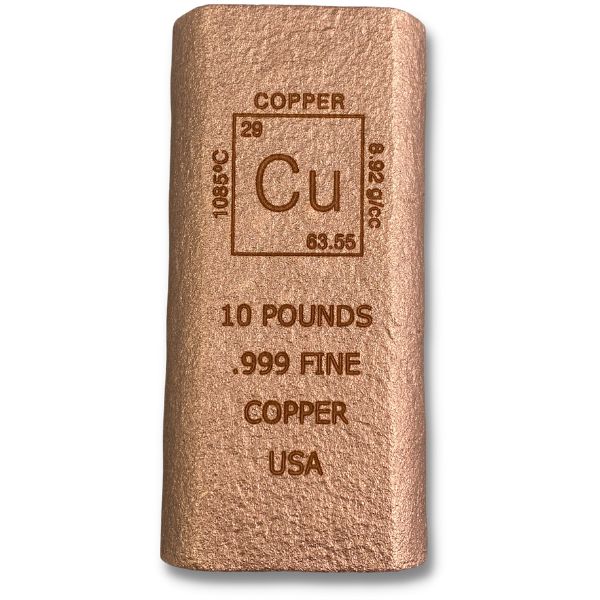
Is copper the right investment for you? The answer depends on your own preferences, investing goals, and budget. Copper is an affordable metal to invest in, since copper rounds cost only a fraction of what you’d pay for a silver or gold coin of the same size. However, copper prices don’t tend to increase as quickly over time as gold, silver, platinum, or other precious metals.
Copper is typically a good investment for stackers who appreciate the metal’s role in global development, people who enjoy the intricate and unique artwork on copper products, and investors who believe that rising EV demand will lead to higher copper prices in the near future.
Final Thoughts: Why Are Copper Prices Rising?
Copper prices are on the rise primarily because of two factors. First, a July announcement that a 50% tariff on copper products could be on the way drove premiums higher in the United States. Second, increasing demand for electric vehicles, which rely on copper, could prove a boon for the metal for years to come.
You might also be interested in:


About The Author

Michael Roets
With over six years of experience reporting on precious metals, Michael Roets covers market news, buying guides, and commentary for Hero Bullion.