
What is a Community Currency?

At a Glance:
-
- Community currencies are not legal tender but may be used in participating businesses.
- Historically, coal and railroad companies often used community currencies called scrip.
- Today, the Goldback is considered a popular community, or local, currency.
- On this page, learn more about the history and modern status of community currencies.
All About Community Currency
When numismatists and historians refer to currency, they’re usually talking about mediums of exchange that have been used as legal tender by a sovereign government. United States coinage, British coinage, and even coins from defunct states like Ancient Rome were all at one point considered legal tender currency and were backed by their issuing governments. To most casual coin collectors, that’s all there is to currency – right?
Well, not exactly. Not all currencies that can carry value are issued by governments, and many more are never considered legal tender by any nation. These alternative forms of currency may only be usable in specific regions, or they may only hold value at a participating business. Some businesses might even issue their own ‘currencies’ as a way to incentivize people to return and shop in their stores! These currencies are often called community currencies.
So what is a community currency? A community currency is a medium of exchange that is not legal tender but which may be used at participating businesses, regions, or local communities.
Rather than an isolated marketing quirk, community currencies actually have a long history in the United States. From the rudimentary pre-government currencies of the colonies, to the scrip tokens of Appalachia’s coal company towns, to the modern Goldback series of fungible gold notes, local and community currencies have always subsidized traditional legal tender throughout the history of our country.
On this page, you’ll be able to read more about the definition, history, and uses of community currencies.
Defining a Community Currency
Numismatists, or people who specialize in currency and mediums of exchange, use several terms to describe the different kinds of currencies you might encounter. Pinning down a precise definition for community currencies can be tricky, since no two community currencies work precisely the same. However, a good place to start is by acknowledging that a community currency is not typically legal tender.
Instead, community currencies are informal currencies that carry value in specific circumstances. Scrip tokens, for example, were only usable at company stores operated by the coal companies who owned the town in which they were issued. The Disney dollar, a former community currency issued by the Walt Disney Company for use at Disney resorts. Goldbacks, a family of informal currency notes made with actual gold, are accepted voluntarily by participating businesses all over the United States.
In a sense, community currencies refer to any informal currency which carries value but is not considered legal tender by a sovereign government.

A Brief History of Community Currencies
The earliest community currencies in the United States predated our national independence. While commodities and existing British currency flourished as mediums of exchange in some colonies, other colonies established their own de facto currencies. Because there was no uniform exchange rate across the colonies, a Pennsylvania pound may have been worth less than a Massachusetts pound. In other words, the value of a given denomination of currency during the Revolutionary period was highly localized.
Perhaps the most famous example of community currency was the scrip token. Scrip tokens were informal community currencies issued by coal mining companies. Scrip was most commonly distributed in isolated company towns, or towns that were wholly owned and operated by the coal companies that occupied them. These scrip tokens were only usable at so-called company stores, which the coal corporations also owned. Hundreds – or thousands – of different scrip tokens were issued across the United States during the height of the coal boom of the 19th and early 20th centuries, many of which are popular among collectors today.
A number of community currencies also cropped up during the Great Depression. The failure of U.S. banks and a rapidly deflating United States dollar during the Great Depression forced many communities to create their own localized currencies in order to make the exchange of goods and services popular.
Scattered throughout this history of community currencies, you’ll also find thousands of much smaller, lesser-known local currencies. Companies in the 1900s, especially those in small towns, would sometimes give out their own currencies. These currencies, which would often include discount offers, could only be used at the issuing company’s store, incentivizing people to come back to spend their money there. Even today, a few rural grocers across the United States employ informal currencies as a marketing tactic.
Community Currencies Today
Believe it or not, several community currencies still exist all over the United States. These currencies are typically only usable at certain businesses, but they can constitute a large enough ecosystem that they encompass entire communities. Since community currencies are more difficult for authorities to trace than traditional, legal tender currencies, they can also pose a unique obstacle for law enforcement and tax authorities.
Compared to the heights of the Great Depression and the apex of company towns in isolated Appalachian regions, community currencies are far rarer to encounter now than centuries ago. Community currencies tend to thrive in environments where access to reliable banking and legal tender currency is difficult, as well as in communities where a limited number of businesses justifies the usefulness of localized currency exchange.
Will we ever see community currencies on the rise again? It’s certainly not impossible. Massive inflation or deflation of the United States dollar would likely prompt communities to establish informal bartering systems to exchange goods and services, and the creation of local currencies is a relatively painless way to do this. However, in the age of digital currencies, a robust Federal Reserve banking system, and the USD as the world’s reserve currency, it seems unlikely that we’ll see community currencies reach the height of their popularity any time soon.
Goldbacks: The Modern Community Currency
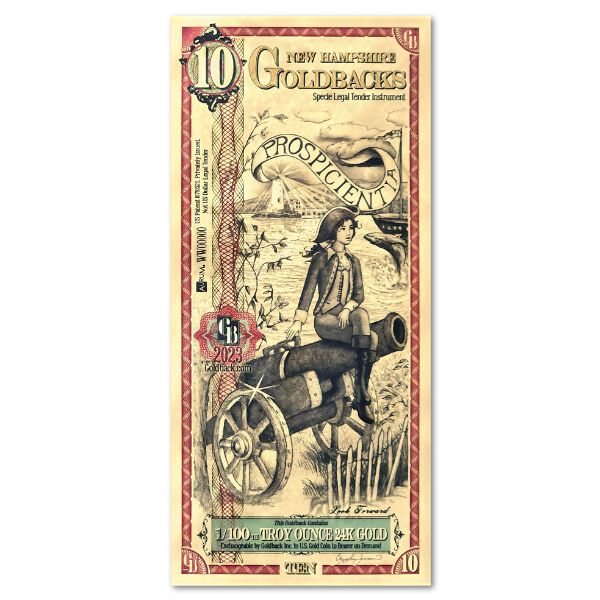
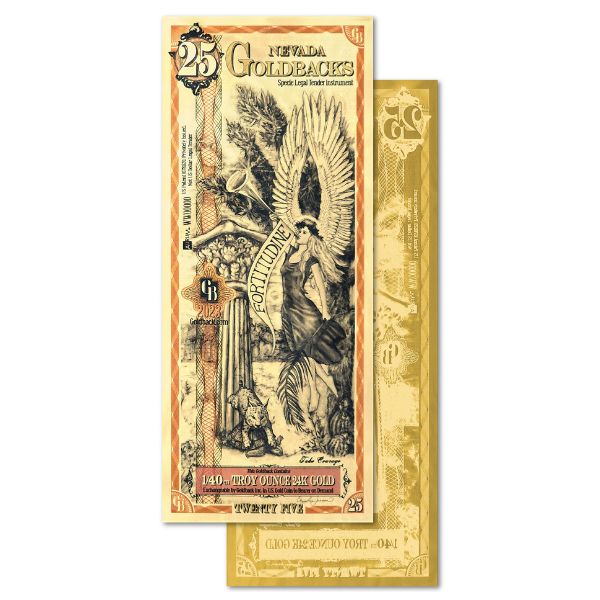
There is one community currency that continues to expand its popularity to encompass more of the United States. The Goldback is a family of voluntary, alternative, community currencies created by Goldback, Inc. Uniquely, each Goldback is produced with 1/1000th oz of actual gold bullion. This means that a 2 Goldback note includes 1/500th oz of gold, a 50 Goldback contains 1/20th oz of gold, and so on.
The Goldback project began in Utah, but Goldback currencies are now available for Nevada, New Hampshire, Wyoming, South Dakota, and Florida. Even if you don’t live in these states, you still may be able to use Goldbacks to purchase goods and services. That’s because the Goldback is a voluntary currency, which means that businesses are free to accept them as payment – or not. According to Goldback, Inc., hundreds of businesses across the United States now accept Goldbacks as payment for goods and services.
Because Goldbacks contain actual gold, they occupy a strange spot in the history of community currencies. The vast majority of earlier local currencies contain no precious metals, making them functionally free-floating currencies. While Goldback, Inc. maintains an daily-updated exchange rate for the currency, the value of a Goldback is highly dependent on the current spot price of gold. Few other community currencies are pegged to a physical asset in the way that the Goldback is.

Final Thoughts: What is a Community Currency?
Community currencies are mediums of exchange that are not considered legal tender, but which may carry value in certain establishments, communities, or businesses. The history of the United States is filled with these strange, isolated currencies. When the banks failed during the Great Depression, when company towns dotted the rural mountains of Appalachia, and when a burgeoning United States was attempting to establish its monetary identity, community currencies helped fill the gaps that a national denomination could not.
Today, the Goldback is one of the finest – and most popular – forms of community currencies in the United States. Its use of actual gold underpins the currency’s value, and a growing number of businesses have begun accepting Goldbacks for their goods and services. The only question is – where will the Goldback project go from here?
You might also be interested in:


About The Author

Michael Roets
With over six years of experience reporting on precious metals, Michael Roets covers market news, buying guides, and commentary for Hero Bullion.