
Which Dimes Are Made of Silver?

At a Glance:
-
- Only U.S. dimes minted in 1964 or earlier contain actual silver.
- Early U.S. dimes contain 89.24% silver, and dimes minted from 1837-1964 feature 90% silver.
- Modern dimes contain no silver and are instead made from an alloy of copper and nickel.
- On this page, learn about which dimes are made of silver – and which rare dimes to look out for.
Which Dimes Are Made of Silver? | Full Collector’s Guide
All U.S. dimes minted in 1964 or earlier contain real silver. With the exception of a few very early United States dimes, most pre-1965 dimes contain exactly 90% silver. Dimes dated 1965 or later are minted with an alloy of copper and nickel and contain no real silver bullion. Pre-1965 dimes are an example of junk silver, circulated American coins traded as investments for their precious metal content. Since all pre-1965 dimes contain real silver, identifying which dimes are made of silver really isn’t that hard to do.
To find out if your dimes are made of silver, start by looking at the date. If your dime is dated 1964 or earlier, then it is almost certainly made of real silver. The design of a dime can also help investors quickly figure out the silver content of their coin, since all pre-Roosevelt versions of the U.S. dime feature genuine silver bullion. If your coin is a dime and does not feature Roosevelt on the obverse, chances are you’re also dealing with a real silver dime.
As seasoned coin collectors already know, precious metal content isn’t the only factor that can make a coin valuable. On this page, learn everything you need to know about which dimes are made of silver – and which silver dimes are worth more than their melt value.
When Did Dimes Stop Being Silver?
Modern U.S. coins meant for circulation don’t contain any real silver – but why? Congress removed silver from America’s dimes, quarters, half dollars, and dollar coins in 1965 by passing the Coinage Act of 1965. While this decision was understandably unpopular among collectors and silver stackers, Congress had a relatively sound reason for removing silver from the change in our pockets. In the early 1960s, the value of silver began to exceed the face value on most circulating currency coins, including the silver dime.
Congress stopped making dimes with silver by passing the Coinage Act of 1965, a law meant to stabilize the value of American currency coins. Coins minted in 1965 and every year since have been made using an alloy of less expensive metals. While pre-1965 coins are technically still currency today, you likely won’t see any knowledgeable investors trade a silver dime for ten cents of goods!
The Full Breakdown – Here’s Which Dimes Are Made of Silver
At this point in our guide, you have a pretty good idea of when dimes stopped being made of silver. The easiest way to identify a silver dime is to look at its date. If your dime was minted in 1964 or earlier, it’s almost guaranteed to be made of 90% silver bullion. Forgeries exist for pre-1965 dimes, but they’re rare, since the melt value of a silver dime doesn’t even get close to justifying the cost of counterfeiting one.
Which dimes are made of silver? The following dimes are minted with 90% pure silver:
- Roosevelt Dimes (Pre-1965)
- Mercury Dimes (1916-1945)
- Barber Dimes (1892-1916)
- Seated Liberty Dimes (1837-1891)
These dimes were minted with 89.24% silver:
- Capped Bust Dimes (1809-1837)
- Draped Bust Dimes (1796-1807)
How Much is a Silver Dime Worth?
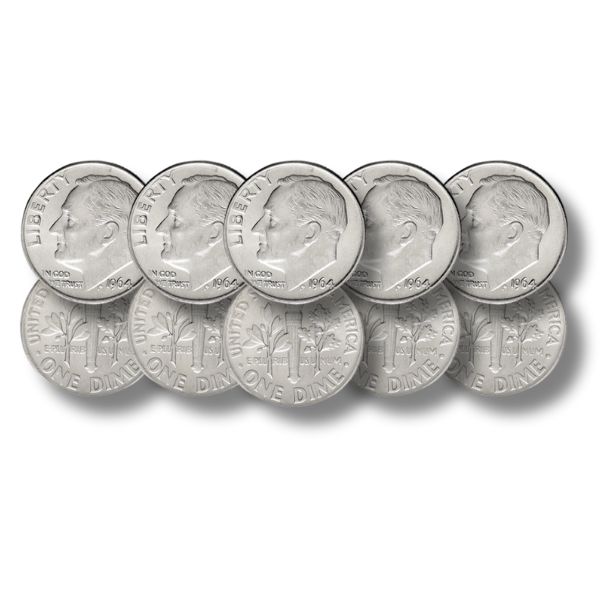
90% silver dimes are always worth at least their melt value in pure silver. A silver dime has a gross weight of 2.5 grams and a silver purity of 90%, giving each coin a silver melt weight of 2.25 grams (0.07234 troy ounces). Multiply the current spot price of silver by .07234 troy ounces to find the approximate silver melt value of a silver dime.
As of December 31st, 2024, a silver dime is worth approximately $2.10. This value will change daily, since the value of silver is always fluctuating.
But committed investors should already know that melt value isn’t the only thing that gives a coin value. Several rare or limited mintage silver dimes can be worth hundreds – or even thousands – of times their silver melt value. Below, we’ll take a look at what other factors help coin collectors determine the value of a silver dime.
Beyond the Metal – Which Silver Dimes Are Valuable?
Like all coins, silver dimes are often valued for more than just their precious metal content. Some rare, especially old, or high-grade silver dimes are worth thousands of dollars and are coveted collector’s items. If you’re sorting through a cache of silver dimes, the best way to figure out which dimes are worth more than melt value is to look for key dates. Key dates are specific dates and mint marks that are rare, hard to source, or sought after by collectors.
Key Roosevelt Silver Dime Dates to Look Out For
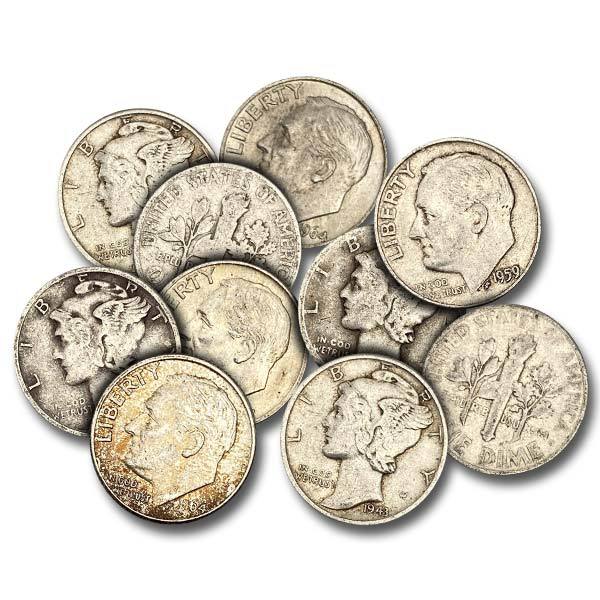
Among the Roosevelt dime series, few dates are especially valuable in the lower grades. Still, some Roosevelt silver dimes can be worth hundreds of times their face values, depending on both mint mark and condition. Here are just five Roosevelt dime key dates to look out for:
- 1950 S Roosevelt Dime
- 1949 S Roosevelt Dime
- 1949 P Roosevelt Dime
- 1951 S Roosevelt Dime
- 1946 S Roosevelt Dime
These dates feature some of the lowest mintage numbers in the coin’s entire run, making them more valuable than the average Roosevelt dime. Unfortunately, many of these coins are not particularly valuable in moderate to low grades. Like many numismatic coins, the value of a Roosevelt dime in circulated condition really starts to climb when you reach the higher grades (60+). If you have one of these key date Roosevelt dimes, consider looking for the coin on a coin value guide to get a better idea of what it may be worth in each grade.
A Brief Overview of Mercury Dime Key Dates
Although Mercury dimes are usually more valuable than pre-1965 Roosevelt dimes, the Mercury dime has very few key dates – at least in the traditional sense. Mintages for the Mercury dime were high throughout the entire series, so it’s difficult to find dates and mint marks that are inherently valuable to collectors. Still, there are a few exceptions to this rule.

Key dates for the Mercury dime series include:
- 1916-D. This is the rarest Mercury dime on the market, boasting a total mintage of only 264,000 coins. Even in terrible condition, 1916-D Mercury dimes are quite valuable to collectors. For reference, a 1916-D Mercury dime graded 30 by PCGS recorded a record auction price of $5,640 in 2023.
- 1921 (No Mint Mark). While not as rare as the coveted 1916-D, the 1921 Mercury dime is still considered a moderate key date with a total mintage of 1.23 million coins. The 1921 Mercury dime is worth only $30-50 in low grades but can sell for $3,910 or more in MS65 condition.
- 1921-D. The only coin in the Mercury dime series with a lower mintage is the extremely valuable 1916-D Mercury dime. 1.08 million 1921-D Mercury dimes were struck. The coin is moderately valuable in the lowest grades (<6) and auctions in the $20-100 range. The highest graded Mercury dime ever auctioned clocked in at MS67 and sold for $23,500 in 2021.
Because of the low survivorship of many designs that predate the Mercury dime, we recommend consulting a coin value guide in order to get a better idea of how much an old silver dime may be worth.
Are Silver Dimes a Good Investment?
The vast majority of silver dimes on the market sell for little more than their silver melt value. This makes pre-1965 dimes a great choice for investors who like to stack junk silver. Junk silver, also called constitutional silver, refers to circulating U.S. coins made with real silver. Junk silver coins are often sold for close to their silver melt value, so buying junk silver can help investors stack more silver without breaking the bank on precious metal premiums.
Of course, the premium you should expect to pay for a cache of silver dimes depends on a few different factors. Silver dimes that have been kept in fantastic condition usually command a much higher premium than heavily circulated silver dimes. Additionally, certain “key date” silver dimes are worth hundreds of times more than their silver melt value. If you plan on buying silver dimes exclusively to stack silver, there are a couple of strategies you can use to get the most out of your investment.

How To Buy Junk Silver Dimes
To save money buying junk silver dimes, the first thing you should do is avoid numismatically valuable dimes. Buying highly collectible silver dimes can be a fun hobby and can even help you generate profit, but collectible dimes are sold at hefty premiums over the melt value of each coin. If your plan is to use junk silver dimes to pad your silver portfolio, you’ll want to stick to old dimes that are minted with real silver but worth little more than their silver melt value.
The best way to effectively stack junk silver dimes is to buy in bulk. Bulk purchasing is a hidden trick in the precious metals industry, since dealers usually discount their premiums when executing large sales. Buying $10, $100, or even $1,000 face value bags of silver dimes can save you hundreds of dollars compared to the cost of buying all of those dimes individually.
By avoiding rare or numismatically valuable dimes and buying in bulk, you can expand your silver portfolio with high-quality junk silver while saving money on premiums.
Final Thoughts: Be Sure To Check That Coin Jar!
While the coins in your pocket are probably made of inexpensive metals, most of American coinage history was characterized by coins made with real silver bullion. All U.S. dimes minted prior to 1965 are minted with either 90% or 89.23% pure silver, making them a great way for modern investors to build a fun and unique collection of silver bullion.
If you plan on sifting for silver in your personal coin jar, be sure to look for dimes minted in or before 1964. Additionally, looking for key dates may help you find some hidden gems that are worth even more than a simple silver dime!
You might also be interested in:


About The Author

Michael Roets
With over six years of experience reporting on precious metals, Michael Roets covers market news, buying guides, and commentary for Hero Bullion.