
Geopolitics and the Gold Market – What Really Moves the Price of Gold?

At a Glance:
-
- Geopolitics can have both a direct and indirect impact on the price of gold.
- Gold is a safe haven asset, so it often becomes more valuable during uncertain times.
- Investors can use geopolitical news to make more informed investing decisions.
What Really Moves the Price of Gold?
Gold prices are notoriously difficult to predict. The spot price of gold can change from day to day, and wild price swings are a fixture of all precious metal markets. Although it is not possible to predict future gold price movements with a high degree of certainty, we do know that several factors help determine the value of gold. The value of gold changes primarily based on supply and demand, economic key indicators, and geopolitical uncertainty.
Geopolitics and the gold market – what’s the relationship? Geopolitics plays an important role in driving market demand for precious metals. The term ‘Geopolitics; refers to international relations between two or more countries. Deteriorating relations between countries can increase demand for gold by causing gold supply disruptions, heightened risks of armed conflict, and geopolitical uncertainty. Historically, gold has overperformed in wartimes, and the precious metal tends to appreciate in value during periods of characterized by instability and political crisis.
Gold and other precious metals are considered safe haven assets. Safe haven assets, or investments that tend to perform well in unfavorable economic climates, become more attractive to investors when geopolitical relations take a turn for the worse. While gold’s price is determined by multiple factors, geopolitics plays a crucial role in the value of precious metals like gold.
What Are Geopolitics – And What Do They Have to Do With Gold?
‘Geopolitics’ is a term used to describe the relationships between different countries. When the geopolitical relationship between two countries is positive, the countries trade regularly, negotiate for political agreements and treaties, and generally avoid conflict. But when this relationship deteriorates, two countries may limit trade, impose harsh import tariffs, or even threaten armed conflict or war.
Geopolitical uncertainty can impact the value of gold in a few different ways. When the geopolitical relationship between two countries begins to worsen, gold prices can be affected in three main ways:
- Gold Supply Disruptions. When U.S. relations deteriorate with a major producer of gold, such as China or Russia, these countries may limit the amount of gold bullion that they export to the United States. If demand for the precious metal remains high but supply decreases, the result is a higher gold spot price.
- Risk of Conflict. If the geopolitical relationship between two countries gets bad enough, it can lead to armed conflict. During wartimes, countries tend to spend more money than they should, which can lead to inflation. Precious metals like gold retain value during periods of high inflation, which means that they often become more valuable when the risk of global conflict is high. As a recent example, gold prices increased briefly when tensions between Iran and Israel reached a near-boiling point.
- General Instability and Uncertainty. Even if geopolitical relations don’t deteriorate entirely, the impact of geopolitical uncertainty on gold prices has been widely studied by economists. When investors are unsure of the future stability of their geopolitical region, they tend to put more money into safe haven assets like gold. This heightened demand drives gold prices higher.
The relationship between geopolitics and gold prices has been explored by researchers for decades. While it is impossible to predict with certainty how gold prices will respond to a given event, the evidence suggests that gold becomes more valuable during periods of global crisis and geopolitical instability.
War and Gold Prices – A Correlation Analysis
Unsurprisingly, traditional assets like stocks and bonds usually lose value during war. When a country is affected by war and violence, consumers are less likely to feel confident investing in businesses. Adding to the trouble for traditional investments during wartime is conflict’s tendency to worsen inflation in affected nations. As the buying power of a currency decreases, citizens tend to spend most of their money to keep up with their living expenses, leaving little cash left over for investments.
Unlike traditional stocks and bonds, gold tends to perform better during times of conflict. Over the last fifty years, gold prices have increased following the outbreak of almost every major international conflict.

Does gold always increase in price during wars? Gold does not necessarily always become more valuable during wars. During prolonged conflicts, gold may enter periods of short-term volatility. This doesn’t mean that gold is not an excellent investment during periods of war or heightened geopolitical tensions. It does go to show that predicting gold’s price-action is nearly impossible to do reliably, though.
Why do gold prices increase during war? Gold becomes more valuable during war because it is a safe haven asset. Unlike traditional investments, gold either retains or gains value when inflation rates increase – and war often leads to inflation. When war becomes a possibility, demand for gold spikes because investors see it as a way to protect their assets against inflation and economic uncertainty.
How Does Geopolitical Uncertainty Impact the Price of Gold?
Geopolitical tensions do not have to escalate to outright war in order to impact the price of gold. Gold’s spot price is driven by investor speculation, which can be influenced by the perception of heightened geopolitical tensions between two or more countries. In other words: some investors buy gold when they are scared that geopolitical tensions are about to get worse.
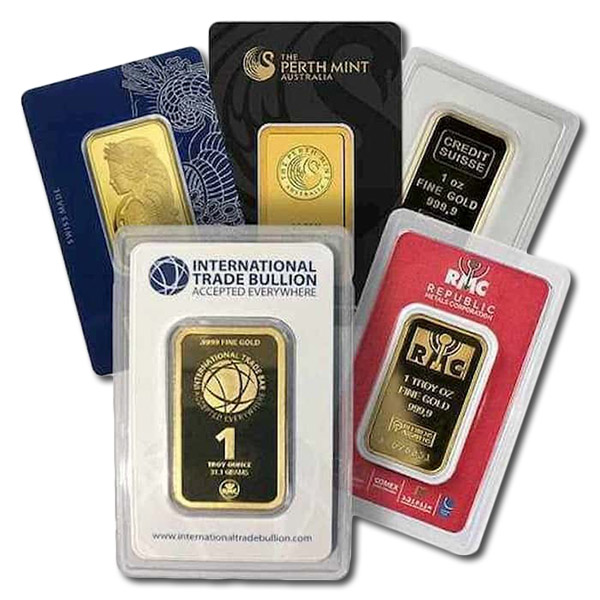
We refer to this concept as ‘geopolitical uncertainty.’ Gold is often considered a hedge against uncertainty because it holds value in nearly every climate. Since the gold has intrinsic value, it is unlikely to ever become worthless. The same cannot be said for fiat currencies, stocks, or bonds.
How does geopolitical uncertainty impact gold prices? Gold prices tend to go up when geopolitical uncertainty increases. Investors might buy more gold if they think that relations between major nations are beginning to deteriorate – even if these nations are not on the cusp of a genuine armed conflict.
As an example, consider former President Donald Trumps trade war with China during 2019. The price of gold jumped more than 1% when the U.S. President announced that it may take longer than expected to come to a trade deal agreement with China. The trade war between China and the United States consistently impacted gold prices, and it is not difficult to see why. The threat of a trade war increased U.S.-China tensions, which lead to more geopolitical uncertainty and higher gold prices.
History is filled with examples that illustrate the close relationship between geopolitical uncertainty and gold prices. Gold’s ability to perform well during periods of conflict, recession, and rapid inflation make it a popular safe haven asset among investors.
Can Geopolitics Be Used to Predict Gold Prices?
Can geopolitical news be a good indicator of gold price trends? In the long term, geopolitics can be an effective way for gold traders to time their investments. Because we know that gold becomes more expensive during times of conflict, buying gold when a war between two countries seems likely is a tried-and-true investment strategy.
Recent global conflicts help justify this investing model. Gold prices increased by more than 10% in the aftermath of Russia’s invasion of Ukraine. The spot price of gold surged another 9% after the October 2023 Hamas attack on Israel renewed the threat of war between the two countries. We could go on for days. The bottom line? Major geopolitical developments can help investors predict when gold is likely to increase in value over time.
Geopolitics can be an effective way for investors to predict gold price-action, but using geopolitical news to try and time the gold market in the short-term is another story entirely. Here are two reasons why geopolitical developments are not a reliable real-time indicator of where gold prices may be heading:
- Timing the News is Difficult. Following the news is a good way to stay on top of gold prices, but gold price-action often moves too quickly for the average investor to reliably react to new developments. For certain geopolitical news stories, gold’s price may spike dramatically before falling again in a day or less.
- Speculation Complicates Gold Swing-Trading. Like with any other investment, gold prices are driven as much by speculation concerning breaking news as by the news itself. Investors might struggle to use geopolitics to trade gold in the short-term because it is difficult to predict how – and how quickly – the market will react to a given event.
Final Thoughts: Geopolitics and the Gold Market
Geopolitics directly and indirectly influence the spot price of gold. Historically, the yellowish precious metal has performed its best during times of economic uncertainty, geopolitical instability, and global conflict. It is not possible for the average investor to predict the future price of gold with any degree of certainty. However, the relationship between geopolitics and the gold market is well-established among economic research. Investors can use geopolitical news to make more informed investing decisions.
You might also be interested in:


About The Author

Michael Roets
With over six years of experience reporting on precious metals, Michael Roets covers market news, buying guides, and commentary for Hero Bullion.