
How Do Wars Affect Gold Prices? A 50-Year Analysis

At a Glance:
-
- Historically, gold has performed well during wartimes.
- Conflict impacts gold prices by increasing government spending and threatening recession.
- Learn more about how conflict, inflation, and other factors influence gold prices on this page.
How Do Wars Affect Gold Prices?
Gold’s current spot price is influenced by a number of factors. Unlike traditional assets, gold tends to overperform during economic downturn and geopolitical uncertainty. This reverse correlation is a major reason why gold is considered one of the world’s best safe haven assets. Investors put money into gold because of its role as an inflation hedge and its historical performance during periods of economic decline and world conflict.
As active wars rage on in both Gaza and Ukraine, gold continues to soar. For millions of investors, the precious metal is a proven method of keeping a portfolio healthy during the most difficult of times. So how do wars affect gold prices? For committed gold investors, it’s no secret that gold thrives in uncertain, conflict-ridden climates. But why does gold perform well when the world is rocked by armed conflict and war?
Gold performs well during conflict because it is seen as an intrinsically valuable safe haven asset. Gold has a proven track-record of maintaining value in nearly every conceivable climate, so it makes sense to bet on gold when the world is on fire. Stocks and bonds often tank in value during wartimes, because investors are cautious about putting their money into traditional assets when conflict threatens the infrastructures supporting these assets. Gold doesn’t have this problem – the yellowish metal has intrinsic value, and demand for gold only increases amid uncertainty and economic recession.
Of course, that’s the short answer. Keep reading for the complex answer to one of the most pressing questions in investing: how do wars affect gold prices?
Does Gold Thrive During Conflict?
Gold has historically thrived in times of war. The precious metal is a safe haven asset, which explains why so many people buy gold ahead of anticipated recessions. When the global economy heads in a bad direction, investors search for ways to protect their assets. Since gold has intrinsic value, is a physical product, and has a track-record of excellent long-term price performance, it is a great option for investors who want to shield their portfolios during times of crisis.
Conflict is a particularly clear driver of gold prices. When wars break out, stocks suffer from an intense sell-off, which pushes prices down and creates a vicious cycle for investors. The opposite tends to happen with gold. When geopolitical tensions worsen and investors expect a war will soon begin, people gravitate toward safe haven assets like gold. As a result, gold prices increase sharply throughout the course of prolonged armed conflict.
Don’t believe us? Let’s take a look at the data.

Gold prices have risen sharply at the onset of nearly every major conflict since 1979. Both the Soviet invasion of Afghanistan in 1979 and Russia’s 2022 invasion of Ukraine saw substantial increases in gold’s average spot price. The Iraq war led to modest gold gains for a few years and then an exponential bull market until the war’s conclusion in 2011.
The takeaway? Gold tends to increase in value at the beginning of each war between two countries. For more recent evidence, look no further than the 2023 outbreak of armed conflict between Israel and Hamas in Gaza. When the October Hamas terror attacks made international headlines, gold bulls drove the metal to $2,000 for the first time in months amid fears that a war was in the cards.
Gold prices have held steady since then, hitting several all-time highs in early 2024 as conflicts in Gaza and Ukraine drive investors to safe haven assets like gold coins and bars.
Historical evidence is clear: gold thrives during times of war.
What Else Drives the Price of Gold?
It is not just conflict that signals a potential bull market for gold. Gold also tends to perform exceptionally well during periods of high inflation and economic recession. Because of its role as a safe haven asset, investors buy gold when they fear that traditional assets may suffer from geopolitical uncertainty and economic turmoil.
Let’s take a look at a couple more charts.
First, gold prices are highly correlated with inflation rates. When inflation is high, gold prices tend to climb. Likewise, gold’s spot price takes a dive when inflation rates suggest that the global economy is heading toward recovery. Below, we’ll dive into the relationship between gold prices and inflation.

With a few notable historical exceptions, gold prices tend to increase in-tune with U.S. inflation data. During some periods, gold’s price tends to increase while inflation rates fall. It is important to remember, however, that these periods also coincide with major world conflicts. In 2008, gold prices climbed sharply while inflation rates plummeted. However, this year also featured the outbreak of the Russo-Georgian war and sustained conflict during the American war in Iraq.
In other words, both armed conflict and economic signals like inflation data play roles in determining gold’s price. During periods of war and high inflation rates, gold bullion bulls tend to see their biggest victories.
Gold prices also increase during economic recession. We’ve got one more chart for you to consider before we get back to how wars affect gold prices.

Once again, gold thrives in a climate that destroys the value of most traditional assets. In every economic recession but one (1990), gold prices climbed sharply. Because gold is commonly considered a safe haven asset, investors flock to the precious metal when they’re concerned about the strength of the economy – and the traditional assets that rely on its sustained performance.
What does all this data mean? In short, it means that gold has historically performed well during times of crisis. Whether the world experiences armed conflict, sky-high inflation rates, or economic recession, gold’s intrinsic value allows it to retain or gain value as other assets flounder.
Why Does Gold Get More Expensive During Wars?
It would be easy to say that wars themselves increase the value of gold, but the truth is more complicated. It is true that investors tend to prioritize safe haven assets, especially gold, when global conflict threatens security. War itself doesn’t lead to significant increases in the value of gold. Instead, experts find that the severity of a war can impact how much gold prices are likely to be affected.
During short, globally unimpactful wars, gold prices may only move a little bit. But during massive conflicts, such as the Iraq War, gold skyrockets over time. Why is this? The simplest answer is that prolonged, significant global conflicts cause higher government spending and currency creation.
Wars Cause Inflation – Which Makes Gold More Expensive
When a major war breaks out, the governments involved in a conflict are forced to increase spending in a big way. And when spending increases, many governments respond by printing more currency. Of course, printing too much new currency causes inflationary pressure. As a result, wars influence gold prices by increasing inflation rates, which directly affect the value of precious metals like gold.
The relationship between inflation data and gold prices is well-established in economist circles. Even this year, inflation data played a major role in gold’s breakout year. Because large wars result in government spending and increased money printing, it makes sense that gold would become more expensive when conflict breaks out.
Wars Can Cause Recession – Which is Also Good For Gold
Large wars can also lead to recession – although this is not always the case. When wars cause economic recession, it is usually because government money printing led to significant inflation. High inflation rates cause consumers to spend less, which in turn means that companies make less money and fire employees to cut costs. The resulting unemployment makes the spending problem even worse, creating the vicious cycle we call a recession.
It is important for investors to remember that much of gold’s price-action is determined by speculation. Even if a war does not directly cause inflation and economic recession, fears of these two consequences can drive safe haven asset values during the onset of a conflict. In other words, gold’s price increases during war because investors are betting that inflation rates may climb and lead to a future recession.
What’s the takeaway for gold’s wartime price performance? Clearly, there are a number of factors that help to determine gold’s spot price. Many of these factors that drive gold prices higher become prevalent during war. Therefore, gold performs well during conflict, even if the metal’s performance is not a result of the conflict itself.
Is Gold a Good Investment During War?
Historically, gold has been one of the most effective investments during times of conflict. Both economic and militaristic conflicts tend to lead to higher gold prices. That’s right – even trade wars can positively impact the price of gold, according to economists. During the Donald Trump presidency, a prolonged 2019 trade war with China drove gold prices to new heights.
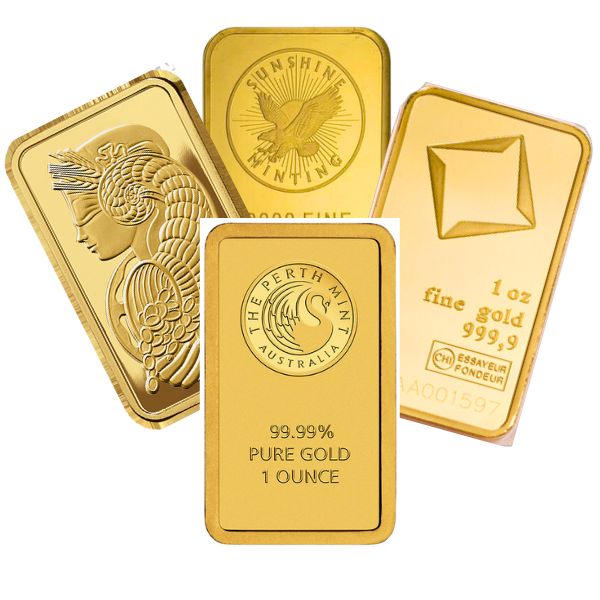
The available evidence makes one thing certain: gold is a relatively safe bet when purchased on the heels of an explosive conflict or war. Let’s look at the most recent data:
- Gold climbed after Russia’s invasion of Ukraine.
- Gold prices increased when Israeli-Palestinian tensions increased.
- Gold’s spot price shot up during Iran’s bombing of Israel.
As gold continues its record-shattering year, it is clear that gold remains a premier investment for consumers who want to protect their assets during periods of armed (and economic) conflict between other countries.
When is the Best Time to Buy Gold?
Most investment experts recommend buying gold as a hedge against geopolitical uncertainty. Gold – and other precious metals – see their best price performance during uncertain geopolitical and economic climates. Take a look at a few of the charts we featured earlier in this guide. In the past fifty years, gold has consistently seen explosive growth when conflict, recession, or inflation threatens the global economic ecosystem.
Based on the evidence we currently have, gold is an excellent bet during uncertain times. The key operating phrase, however, is that this claim is based on the evidence we currently have. The price of gold was highly suppressed by the global gold standard until the “Nixon Shock” in 1971. This means that we really only have just over 50 years of gold price history from which we can draw conclusions.
Opposing Viewpoint: Gold is Not Always a Safe Bet
Analysts warn that gold is not always a safe bet. Existing data suggests that gold is negatively correlated with inflation rates, interest rates, and geopolitical tranquility – but these trends might not hold forever. For an opposing viewpoint on gold, consider the position of Tyler Cown, a Professor of Economics at Virginia’s George Mason University:
[Quote] “Gold is no longer a good hedge against bad times, as it correlates with both low interest rates and global economic growth. Gold becomes another cyclical economic asset, and that is a big part of the reason why gold prices are no longer followed so closely or seen as useful harbingers of social and economic collapse.”
Cown is not alone. Some experts claim that gold’s price trends are too new to make any concrete judgments about what determines the value of gold bullion. However, analysts who believe gold is not a good hedge against uncertainty appear to be the minority. One survey by Bloomberg found that the majority of investors still consider gold the best hedge against high inflation rates.
Gold’s role as a hedge against geopolitical uncertainty may not be universally accepted – but physical precious metals remain the investing world’s go-to during crises.
Final Thoughts: How Do Wars Affect Gold Prices?
Historical data for gold prices may be limited, but the information we have access to demonstrates that the precious metal performs extraordinarily well during various types of conflict. In times of armed conflict or trade war, gold prices have consistently risen in every major stress point since 1974.
However, it is impossible to conclude with certainty that these trends will hold indefinitely. Gold has a place in every investor portfolio because of its role as a hedge against inflation and economic/geopolitical uncertainty. Most analysts recommend keeping around 10% or less of your portfolio in gold.
While we cannot know what the future holds, the past tells us that gold thrives in times of conflict and war.
You might also be interested in:


About The Author

Michael Roets
With over six years of experience reporting on precious metals, Michael Roets covers market news, buying guides, and commentary for Hero Bullion.