
What Was the Coinage Act of 1965?

At a Glance:
-
- The Coinage Act of 1965 is one of the most impactful coinage laws in U.S. history.
- The legislation removed silver from most U.S. coins and reduced the half dollar to 40% silver.
- Additionally, the law removed mint marks from American coins until they returned in 1968.
- On this page, learn about the Coinage Act of 1965 and its consequences for investors/collectors.
What Was the Coinage Act of 1965?
In 1965, Congress passed a law that would forever change the silver coin market in the United States, as well as around the globe. The Coinage Act of 1965 removed 90% silver from most U.S. coins and reduced the silver content of half dollars to 40%. All dimes, quarters, and dollar coins minted in 1965 or later were minted using cheaper metals like zinc, copper, and nickel.
The law’s provisions also removed mint marks from circulating U.S. coins to discourage coin collecting and alleviate a growing coin shortage in the country. This, in combination with the removal of silver from circulating coins, was intended to stop collectors from hoarding coins due to perceived rarity or silver price speculation.
While mint marks returned to U.S. coins three years later, the United States stopped minting circulating coins using silver in 1965. Half dollars continued to be minted using 40% silver until 1970, at which point the silver from these coins was also removed in favor of cheaper metals.
On this page, learn more about the Coinage Act of 1965 and its consequences for investors, collectors, and the U.S. economic system.
Background
The main reason for the Coinage Act of 1965 was a growing shortage of coins in the United States, particularly dimes, quarters, and half dollars. These three denominations were minted with 90% silver, and investors began hoarding them in hopes that the value of silver would increase over time in comparison to the U.S. dollar. The price of silver had begun rapidly increasing in the early 1960s, leading to heightened demand for the accessible and affordable silver found in circulating U.S. coins.
Other coins were also at risk of being hoarded prior to the Coinage Act of 1965. As the hobby of coin collecting became more popular, coins with certain mint marks were commonly plucked out of circulation by collectors who believed they would one day be rarer and more valuable.
To address the growing coin shortage and rising silver prices, Congress passed the Coinage Act of 1965.
The Coinage Act of 1965
Like other coinage laws, the Coinage Act of 1965 includes quite a few provisions. For most modern investors, the Coinage Act of 1965 did two important things:
- The law removed silver from U.S. dimes and quarters and reduced the half dollar’s silver content from 90% to 40%.
- The law also removed mint marks from circulating coins until 1967.
Prior to the Coinage Act of 1965, U.S. coins were being rapidly removed from circulation by both silver investors and coin collectors. Because dimes, quarters, and half dollars were minted with 90% silver, they were hoarded by investors as the price of silver began to outpace the value of these coins. Other coins were taken out of circulation by coin collectors who hoped they would become more valuable over time.
By removing the and mint marks from U.S. coins, Congress hoped that Americans would stop hoarding these coins and allow them to circulate once more.
Consequences of the Coinage Act of 1965
As far as the government’s goals are concerned, the Coinage Act of 1965 was partially effective. The legislation removed silver from American coins, making them less valuable to investors who wanted to speculate on the rising price of silver. Mint marks returned to U.S. coins three years later in 1968, and coin collecting remains a popular pastime.
The End of 90% Silver U.S. Coins
The most important effect of the Coinage Act of 1965 was the removal of silver from most U.S. coins. After a lengthy debate among lawmakers, half dollars were allowed to retain a reduced silver content of 40% until 1970. This law remains in effect today; U.S. coins are no longer minted with any actual silver.
Half dollars were minted with 40% silver until 1970, at which point their silver content was also reduced to 0%. Today, coins minted prior to 1965 are called 90% junk silver and are bought and sold by precious metal investors and coin collectors.
Removal of Mint Marks From Coinage
Another major provision of the Coinage Act of 1965 was the removal of mint marks from U.S. coins. A mint mark is a small letter on the obverse or reverse of a coin that denotes which U.S. Mint location produced it. Coin collecting had become a popular pastime for many Americans in the 1960s. Certain mint marks were considered rarer than others, and Americans trying to build a collection would intentionally pluck coins with their desired mint mark out of circulation.
While mint marks returned to United States coins in 1968, the Coinage Act of 1965 successfully discouraged coin collecting by removing mint marks from coins. The only exception to this rule was 1964 coinage with the “D” mint mark. These coins, minted at the Denver Mint, were allowed to keep their mint marks.

Why Did the U.S. Mint Remove Mint Marks?
Mint marks were removed from U.S. coins from 1965 until 1968 in order to discourage coin collecting. U.S. Mint officials believed that collectors were contributing to the growing coin shortage in the United States by removing coins with sought-after or scarce mint marks from circulation. Whether coin collectors meaningfully contributed to the coin shortage is unclear, but Congress responded by removing mint marks from U.S. coinage via the Coinage Act of 1965.
1964 coins from the Denver Mint were allowed to retain their mint marks, but all other coins minted from 1965 until the provision’s repeal in 1968 included no mint marks.
Mint Marks Return to U.S. Coinage in 1968
Only coins from 1965, 1966, and 1967 were minted without mint marks denoting which mint produced them. Mint marks returned to U.S. coinage in 1968 and have remained a fixture of American coins ever since. Coins minted at the Philadelphia Mint typically feature no mint mark, but all other U.S. coins feature mint marks.

About Junk Silver
For silver investors, the biggest impact of the Coinage Act of 1965 was the removal of silver from dimes and quarters minted in 1965 or later. While half dollars continued to be minted with a reduced silver content of 40% for half a decade, silver was also completely removed from these coins in 1970.
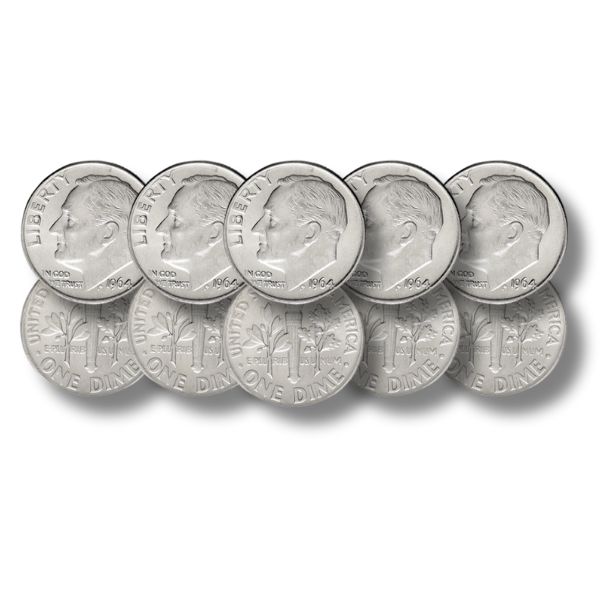
The term junk silver refers to silver U.S. coins minted prior to 1965. Dimes, quarters, half dollars, and dollar coins minted in 1964 or earlier were struck using 90% pure silver, making them considerably more valuable than their denominations. Junk silver is a popular way to invest in silver because of its relative affordability and wide availability.
Buying Junk Silver
Interested in adding 90% pure junk silver coins to your collection? You can buy junk silver from a range of online precious metal retailers, including Hero Bullion. Hero Bullion sells a variety of different junk silver products, including dimes, quarters, and half dollars. Take advantage of industry-leading pricing, free shipping on qualifying orders, and an extensive inventory of junk silver coins with Hero Bullion.
You can also sell junk silver to Hero Bullion. Hero Bullion buys junk silver and offers industry-leading buyback prices, fast order settlement, and quick payment for all sales.

Final Thoughts: The Coinage Act of 1965
For coin collectors and silver investors, the Coinage Act of 1965 is one of the most important laws in modern United States history. The bill removed silver and mint marks from circulating coinage in order to combat coin hoarding during a coinage shortage that developed in the early 1960s. Today, coins are minted with inexpensive metals like zinc, nickel, and copper.
Junk silver coins are U.S. coins minted prior to 1965. These coins were minted with 90% pure silver and are worth considerably more than their face values. 90% junk silver coins sold by dealers like Hero Bullion are an excellent way to invest in silver without breaking the bank on precious metal premiums.
You might also be interested in:


About The Author

Michael Roets
With over six years of experience reporting on precious metals, Michael Roets covers market news, buying guides, and commentary for Hero Bullion.