
Which Nickels Contain Silver?

At a Glance:
-
- Most U.S. nickels are minted from an alloy of 75% copper and 25% nickel.
- Only the “war nickel” minted from 1942 to 1945 contains actual silver.
- Wartime nickels were minted with 35% pure silver to conserve nickel during World War II.
- On this page, learn more about which nickels contain silver.
Which Nickels Contain Silver?
Because of the name, many Americans assume that nickels are made with nickel. This is only partially correct. Modern U.S. nickels are minted with an alloy consisting of 75% copper and 25% nickel. This alloy, named cupronickel, has been used to produce every nickel in the United States since 1866 – except for one.
In 1942, during the heights of World War II, the U.S. Mint decided to remove nickel from its coins in order to support the war effort. Nickel’s strength, temperature resistance, and ductility made it perfect for use in transport vehicles, armor plating, and weapons. As a result of this change, the U.S. Mint began striking nickels with a new alloy of 9% manganese, 35% silver, and 56% copper. Commonly called “war nickels,” these coins are considered collector’s items today and are valued for their precious metal content.
So which nickels contain silver? The only true nickel to contain silver is the war nickel, which was produced using 35% silver from 1942 until 1945. While the much earlier half dime was also minted using silver and has a value of five cents, this coin was only marginally circulated and was never referred to as a nickel. In other words, the war nickel remains the only U.S. nickel to contain real silver.
On this page, learn more about the history behind one of America’s most fascinating coins.
What Are Nickels Made Of?
Modern nickels contain an alloy, or a combination of two or more metals, made from 75% copper and 25% nickel. Unlike other coins whose compositions have changed considerably over the years, the metal content of the nickel has been relatively static since it was first introduced in 1866.
Prior to the modern nickel released in 1866, the U.S. Mint produced a half dime made out of silver. While this coin was made with real silver since 1792 and was worth five cents, it was not considered a nickel. The first true nickel, called the shield nickel, was first produced in 1866. This coin was made with an alloy called cupronickel composed of 75% copper and 25% nickel. The result was a highly durable coin that proved useful in circulation.
About Cupronickel
Cupronickel is the term used to describe the alloy of copper and nickel used in United States nickels. The U.S. isn’t alone in our love of cupronickel coinage, either. Several other countries around the world, including the British Royal Mint, use cupronickel for their coinage, owing to the metal’s high durability, malleability, and ability to be easily recycled.
Aside from coinage, cupronickel has a number of applications in science, technology, and, most importantly, the military. The metal’s combination of malleability at high temperatures and durability makes it an excellent material for crafting military equipment, including vehicles, armor, and even weapons. Keep this in mind, because it’ll be important as we discuss the first (and only) U.S. nickel minted with real silver.
After cupronickel was introduced as the alloy for nickels in 1866, the U.S. Mint continued to produce coins using 75% copper and 25% nickel until 1942, when an unexpected event forced the U.S. Mint to upend its decades-old procedure for minting nickels.
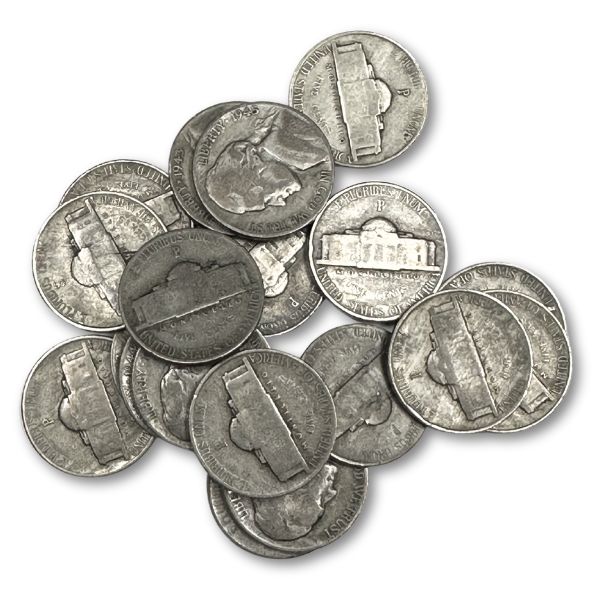
Silver War Nickels – The Story
After the Japanese attack on Pearl Harbor, the United States officially entered World War II. The Second World War was considered a total war, which refers to a war that involves the mobilization of nearly every aspect of society. In order to succeed on the battlefront, the United States needed more than just soldiers; it needed a massive supply apparatus that included the help of civilian institutions inside the country.
This included the United States Mint. In 1942, the U.S. military was in desperate need of nickel. Nickel’s resistance to corrosion, malleability, and durability made it an excellent tool in the construction of military transport vehicles, armor plates, and even some weapons. By this time, U.S. Mint was using a massive amount of nickel to produce the five-cent coins we all recognize.
In order to free up nickel supply for the war effort, the U.S. Mint began producing nickels using an alloy of 9% manganese, 35% silver, and 56% copper. By eliminating nickel from circulating nickels, the United States military was able to requisition existing nickel supplies from the U.S. Treasury in order to build more assets for the ongoing war. This continued until the end of World War II in 1945, at which point the mint resumed manufacturing nickels with the standard cupronickel alloy of 75% copper and 25% nickel.
Interesting Facts About War Nickels
Two interesting facts help make the so-called war nickel a fascinating piece of American coinage.
First, and most obviously, the war nickel is the only U.S. nickel to have been minted using real silver. Its silver content (35%) is nominal compared to most circulating silver U.S. coins, but war nickels are still popular collector’s items and carry intrinsic value because of their silver composition. Like many U.S. coins, the value of an average war nickel depends jointly on its silver content and historical importance.
Second, the war nickel was the first circulation U.S. coin to feature a “P” mint mark. Although billions of coins have been produced at the Philadelphia Mint, U.S. coins from Philly typically include no mint mark. Mint officials believed that it was important for people to be able to distinguish between the silver war nickels and non-silver nickels, leading to the addition of the mint mark on the reverse side.
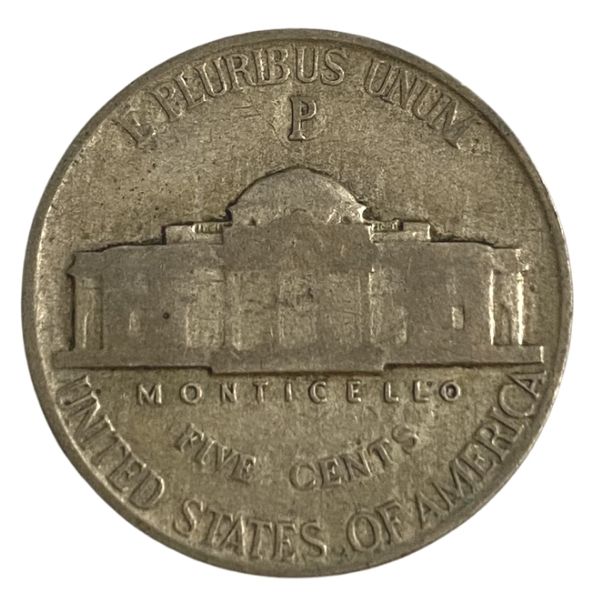
Collecting War Nickels
War nickels can sometimes be an affordable source of silver. Although it is illegal to melt war nickels for their silver content, these coins remain popular among collectors and carry a substantial premium above face value. While the war nickel’s high mintage makes it relatively unpopular among rare coin collectors, there’s a sizable collectibles market for war nickels, and they tend to sell well to silver stackers looking for low-premium junk silver coins.
The war nickel pairs well in a collection with the 1943 cent, which was minted with steel in order to conserve the wartime supply of copper for us in ammunition. Both of these coins, the war nickel and the 1943 steel cent, are similar in that they featured an irregular metal composition as part of the United States’ policy of total war during World War II.
Where to Buy War Nickels
Where can you buy wartime nickels? War nickels can be purchased from most online and local bullion dealers. Hero Bullion sells 35% silver war nickels for some of the most competitive prices online, and many other precious metal stores sell these popular collectible U.S. coins.
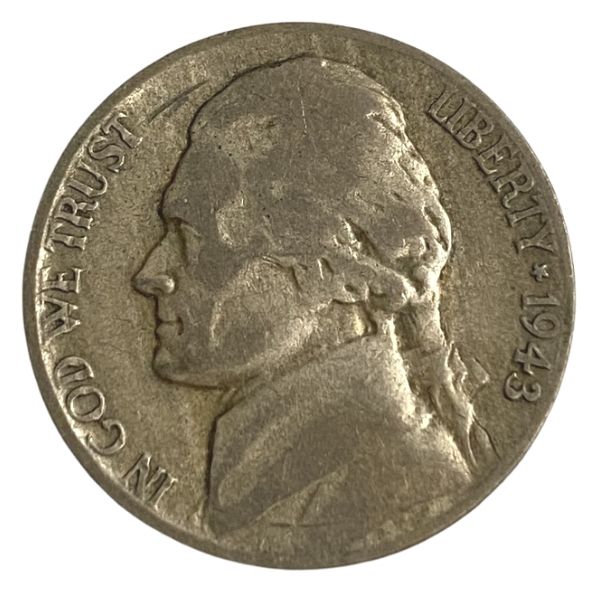
War Nickel Value
Since most war nickels have little numismatic value, the value of a war nickel depends primarily on its melt value. The spot price of silver, which refers to the current market value of a single ounce of silver, fluctuates constantly, so the value of a silver nickel varies from day to day. However, it’s relatively easy to calculate the current melt value of a war nickel.
To figure out how much money a war nickel is worth right now, we’ll need three things:
- The weight of a war nickel (.160754 troy oz)
- The silver purity of a war nickel (35%)
- The current spot price of silver (varies)
To find the melt value of a war nickel, start by multiplying the current spot price of silver by .160754, which is the weight of a single silver nickel in troy ounces. Once you have this value, multiply it by .35, which is the decimal purity of a silver wartime nickel. Let’s look at an example based on a hypothetical silver spot price of $30 per troy ounce.
Multiply 30 by the nickel’s total weight of .160754, and we get a value of 4.82262. Multiplying this value by the coin’s purity of .35, we get a total melt value of approximately $1.69. However, that’s just for a single war nickel, and the best way to get more silver for your cash is to buy more than one wartime nickel at a time.
Dealers often charge an additional premium for small quantities of war nickels. To get the most money out of your silver wartime nickel investment, our recommendation is to buy multiple coins at one time. You can occasionally find war nickels selling for less than melt value, since it’s illegal to melt them down and their mintages are too high to justify a large numismatic premium.
Final Thoughts: Which Nickels Are Silver?
Only one type of U.S. nickel was ever made with real silver. The “war nickel” was produced using an alloy of 35% silver, 9% manganese, and 56% copper during World War II in order to conserve nickel for the ongoing war effort. Today, these coins are popular among coin collectors, and they can also be a great way to save money while stacking silver.
Along with the 1943 steel cent, the war nickel represents the intersection between the U.S. Mint’s operation and the military effort during periods of total war. While these coins aren’t usually worth much more than their silver melt value, their historical importance makes them exceedingly popular among casual collectors and stackers.
You might also be interested in:


About The Author

Michael Roets
With over six years of experience reporting on precious metals, Michael Roets covers market news, buying guides, and commentary for Hero Bullion.