
Which Quarters Are Made of Silver?

At a Glance:
-
- Quarters minted in 1964 or earlier contain 90% pure silver.
- The Coinage Act of 1965 removed silver from circulating United States coins.
- Modern quarters are minted with an alloy of 91.67% copper and 8.33% nickel.
- On this page, learn which quarters are silver, how to identify a silver quarter, and more.
Which Quarters Are Made of Silver?
Although they may look shiny, modern U.S. quarters contain no silver. In fact, it’s been over 60 years since the last silver U.S. quarters were struck by the United States Mint. Today, quarters are minted using an alloy consisting of 91.67% copper and 8.33% nickel. But for most of United States history, quarters were minted with a standard silver content of 90%.
Even today, you can sometimes find 90% silver quarters in circulation. If you do manage to find one in your change, make sure to avoid spending it! A silver quarter is worth considerably more than 25 cents because of the value of the silver it contains. Silver quarters are worth $6 or more each, depending on the current spot price of silver.
So, which quarters are made of silver? Quarters minted in 1964 or earlier are made of 90% silver, but quarters dated 1965 or later contain no silver. The metal composition of U.S. quarters changed after the Coinage Act of 1965, which eliminated silver from the coin and replaced it with an alloy of 91.67% copper and 8.33% nickel.
On this page, learn more about which quarters are silver, how to identify a silver quarter in the wild, and more.
When Did Quarters Stop Being Silver?
For most of American history, quarters, dimes, half-dollars, and dollar coins were minted with 90% silver. That’s why you’ll see “90% junk silver” advertised on some precious metal dealers’ websites. In 2025, circulated 90% silver coins are popular among investors who want to save money on precious metal premiums.
Quarters stopped being silver in 1965. Around 60 years ago, the United States government stopped using silver to produce most circulating coins. Instead, the U.S. Mint transitioned to alloys of cheaper metals in order to save money while precious metal prices continued to climb. What happened in 1965 to cause the U.S. Mint to stop producing silver quarters? The answer is the Coinage Act of 1965, a pivotal piece of legislation that permanently altered the U.S. currency system.
The Coinage Act of 1965
For junk silver collectors, the Coinage Act of 1965 may be one of the most important laws ever passed by Congress. Nationwide silver shortages sparked by demand from collectors and industrialists posed a major problem for the U.S. Mint, which needed a massive amount of silver annually to produce dimes, quarters, and half-dollars.
The Coinage Act of 1965 removed silver from most U.S. coins, including the quarter. These coins were still being produced after the legislation passed, of course, but with cheaper metals, such as copper and nickel.
Although the law was (and still is) controversial among coin collectors, you should know that quarters minted in 1965 or later contain no actual silver. Modern quarter-dollars are instead minted with an alloy consisting of copper and nickel. Before 1965, however, quarters contained 90% silver.
While we likely won’t see the U.S. Mint bust out the old-school silver quarter blanks again any time soon, it is possible to find silver quarters still in circulation. There are likely hundreds of thousands of pre-1965 silver quarters scattered throughout the United States, and each of these coins is worth quite a bit more than its face value!

How to Identify Silver Quarters
If you want to go on a treasure hunt, it is still possible to find silver quarters in the wild. In fact, some spare change hoarders may find a few hidden silver gems in their coin jars, jugs, or drawers!
The good news is that identifying a silver quarter is pretty easy, since all U.S. quarters produced prior to 1965 contain 90% silver by default. And while counterfeiting is undeniably a major problem in the silver industry, the relatively low melt value of silver quarters means that they’re not usually worth the trouble of faking.
Let’s take a look at how to identify a valuable silver quarter.
Checking the Date
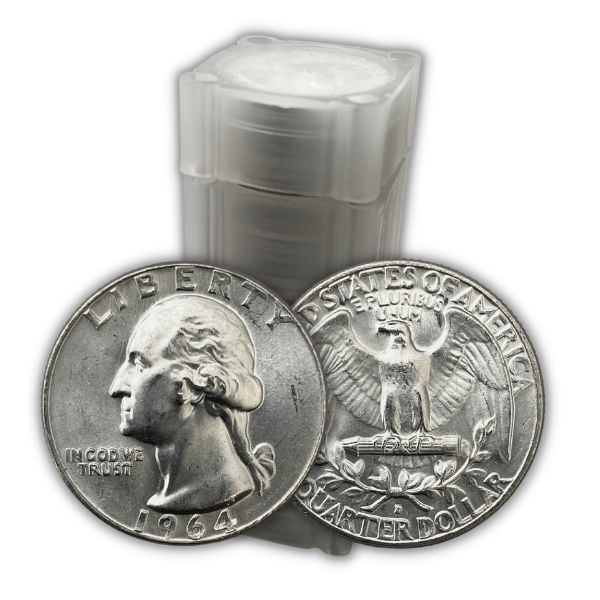
How do you know if a quarter is silver? The easiest way to tell if a quarter is made with silver is to check its date. U.S. quarters dated 1964 or earlier were minted with 90% silver, while 1965 or later coins only contain copper and nickel. The same is true for dimes and half-dollars, although half-dollars were briefly minted with 40% silver after 1965.
That’s it! If you’re sorting through your spare change collection and find a quarter-dollar dated 1964 or earlier, hold onto it, because your coin contains 90% silver.

Are Silver Quarters Counterfeited?
Fraudsters love the precious metals industry. Generally, nearly every silver bullion product can be (and is!) counterfeited. Spotting counterfeits can also be tricky, so we always recommend that investors exercise caution and reach out to an expert if they suspect that their coin looks like it could be a counterfeit.
However, the good news is that silver quarters are seldom worth the cost of counterfeiting. Even when silver prices are high, the melt value of a silver quarter rarely passes $7-8. When counterfeiters create fake coins, they typically target very valuable coins, like the American Silver Eagle or Canadian Silver Maple.
If you’re looking for a specific, rare silver quarter, though, counterfeits could always be out there. The general rule of thumb is that if something is valuable, then there’s somebody out there producing counterfeits of it. If you plan to purchase a rare or limited mintage silver quarter, be sure to exercise due caution to make sure you’re not buying a fake.
Where to Find Silver Quarters
The easiest low-effort way to find silver quarters is to simply pay attention. Most Americans have no idea which coins are made of silver, so you could always receive a genuine silver quarter in your change when paying for goods or services.
If you want to hunt for silver quarters, here are two of the best methods:
- Coin roll hunting
- Buying silver quarters
Below, we’ll take a closer look at these two strategies for finding silver quarters in the wild.
Coin Roll Hunting
Coin roll hunting, often abbreviated as CRH, is the process of buying sealed coin rolls from the bank and searching them for silver coins. Most banks will sell you coin rolls for face value, although some may charge an additional fee per roll or order. Coin roll hunting can be a rewarding hobby, and it may net you a few silver quarters!
The basic premise behind coin roll hunting is simple. Go to your local bank and ask to purchase a roll of quarters. Look through the roll, keeping your eyes peeled for quarters dated 1964 or earlier. Pull out the coins you want, fill the roll with regular quarters, and then return it to the bank.
Coin roll hunters generally recommend working with more than one bank. Choose one bank to order your rolls from, then choose another to drop off your searched rolls. Not only does this cut down on the amount of work you create for bank staff and minimize the odds that you’ll be cut off, but working with multiple banks can help you avoid pulling your own searched coins when buying new rolls.
Searching through sealed rolls of coins can be a great way to find silver quarters, but it does require a great deal of patience. Some coin roll hunters search thousands of rolls before finding a score of silver quarters.
If you want to guarantee that you’ll receive some silver quarters for your portfolio, the best method is to buy them from qualified coin dealers.
Silver Quarters as an Investment
Since silver quarters are relatively abundant in the United States, they’ve become a popular method for investing in silver. Most coin and bullion dealers sell silver quarters, which are often called a type of “junk silver.” Junk silver often retails for a considerably lower premium than silver bullion coins, bars, and rounds, making it an attractive investment class for stackers who want to cut down on unnecessary markups.

Buying 90% Silver Quarters
Online bullion dealers often sell silver quarters in different packages differentiated by face value. A $1 face value pack of silver quarters, for example, contains four of the coins, while a $10 face value package would contain forty. This gives investors quite a bit of flexibility, as it allows stackers to choose how much silver they want to buy at one time.
Silver quarters are typically sold for their melt value, plus a small premium over melt price that can fluctuate from day to day and between dealers. If you plan to buy silver quarters for investing, be sure to check around and compare prices at multiple dealers to make sure you’re getting the best discount you can!
Final Thoughts: Are Your Quarters Silver?
Believe it or not, quarters contained real silver for most of American history. This changed in 1965, when the Coinage Act of 1965 required the U.S. Mint to begin producing quarters with less expensive metals like copper and nickel. Quarters minted in 1964 or earlier were minted with 90% pure silver, making them valuable investment items today.
Whether you choose to hunt for silver quarters in the wild or purchase them from dealers to build your precious metals portfolio, the thrill of finding or buying genuine silver currency is tough to beat!
You might also be interested in:


About The Author

Michael Roets
With over six years of experience reporting on precious metals, Michael Roets covers market news, buying guides, and commentary for Hero Bullion.