
What is a Safe Haven Asset?

At a Glance:
-
- A safe haven asset tends to retain – or even gain – value during uncertain environments.
- Gold is one of the most popular (and useful) safe haven assets available to investors.
- Physical and paper precious metals can help investors diversify their portfolios.
- Learn about what a safe haven asset is and how to buy one on this page.
What is a Safe Haven Asset?
If you spend any time researching your investments, you’ll hear a lot about something called a “safe haven asset.” But what is a safe haven asset? A safe haven asset is an investment that tends to retain or even gain value during periods of heightened uncertainty. Safe haven assets often retain value while inflation rates climb, making them an excellent way to hedge against inflation.
Precious metals like gold and silver are often considered safe haven assets. Investors buy precious metals in order to hedge against the risks of uncertainty, inflation, and instability. Throughout much of American history, gold has been the go-to investment for consumers who want to counterbalance the riskier assets in their portfolios as they hedge against the risks of inflation.
On this page, learn more about safe haven assets, as well as how gold fits the bill.
What Makes a Safe Haven Asset?
A safe haven asset is characterized by its relatively low risk and ability to weather heightened economic instability, inflation, and other uncertainties that can impact markets. Typically, safe haven assets need to have intrinsic value or be non-correlated with traditional economic indicators.
When an item has intrinsic value, this means that it is valuable on its own, even before market speculation has its say. Gold, for example, is intrinsically valuable, as it is both rare and useful. Other precious metals like silver and platinum are similarly intrinsically valuable, since they’re scarce assets that have always held value.
Safe haven assets are also often non-correlated, which means that they do not gain or retain significant value based on traditional economic indicators or market forces. Gold sometimes inversely correlates with signals like stock market performance, for example, gaining value as the stock market declines and investors turn to safe haven assets to shield themselves from uncertainty.
Why Buy Safe Haven Assets?
Investing in safe haven assets can help investors in several different ways.
First, holding safe haven assets can be an excellent way to hedge against inflation. The intrinsic value of precious metals like gold and silver means that these metals tend to retain or gain value while inflation rates climb globally. Even in the short term, the uncertainty sparked by hot inflation reports can drive gold and silver prices higher, even if that same data point often drives stocks lower.
Safe haven assets are also an easy way for investors to inject diversity into their portfolios. Gold, silver, and other precious metals can be a counterweight to riskier investments, such as cryptocurrency or highly volatile technology stocks. The intrinsic value and consistent price action of precious metals help to balance portfolios that are otherwise risk-heavy, which can help investors maintain profit during bearish markets.
Below, we’ll take a closer look at the two main advantages associated with buying safe haven assets like gold and silver.
Safe Haven Investments and Inflation Resistance
Gold’s ability to counter the effects of inflation is part of why it is such a popular investment. Regardless of the value of the United States dollar, gold still possesses intrinsic value. During periods of inflation, gold often gains value, making it an excellent way for investors to park their money in an inflation-resistant market.
Of course, gold isn’t the only safe haven asset with inflation-resistant qualities. Most financial advisors recommend a combination of different safe haven assets, such as other precious metals, treasury notes, and bonds. But as far as classic safe haven assets go, gold’s pedigree is tough to beat.
Risk Management and Safe Haven Investments
Safe haven investments like gold can also be part of a well-rounded portfolio risk management strategy. Investors with higher risk tolerances may also choose to buy gold, silver, or other precious metals, since these intrinsically valuable assets tend to offer slow and steady appreciation with little long-term downside risk.
This isn’t to say that gold always gains value. Precious metals can also lose value, especially in the short or medium term.
Are Precious Metals Safe Haven Assets?
Gold and silver are two of the most common and recognizable safe haven assets. Although exceptions occur and your mileage may vary based on market conditions and other developments, precious metals like gold and silver tend to retain – or even gain – value during periods when the stock market or general economy is on the decline.
As such, gold and silver are often recommended as counterweights to riskier investments. Investors whose portfolios are filled with risky assets may buy gold and silver because of their comparably lower risk exposures. This diversification strategy can help investors balance the high yields of a riskier portfolio with the security and consistency of a low-risk portfolio.
Gold and Silver as Safe Haven Investments
Gold is perhaps the most recognizable and popular safe haven investment. Gold’s inflation resistance, intrinsic value, and ability to serve as a hedge against economic uncertainty make it an ideal safe haven asset for investors looking to protect their funds against uncertainty and instability.
Silver can also be an effective safe haven asset, but silver tends to be more volatile than gold, especially in the short-term or medium-term. In fact, the differing volatility associated with gold and silver makes these two metals staples for investment portfolios all over the world. Gold can serve as a counterbalance to the silver market’s potential volatility, while silver’s rapid appreciation can sometimes give risk-tolerant investors a quick way to add value to their portfolios.

Precious Metals as a Hedge Against Uncertainty
Precious metals can also play a role in hedging against uncertainty. Uncertainty is a natural part of global markets – and life. While there’s no surefire way to avoid the uncertainty of investing, safe haven assets like gold and silver are commonly used to mitigate the risk of uncertainty native to American and global markets.
Aside from retaining value during periods of uncertainty, safe haven assets like gold can sometimes become more valuable when American investors become concerned about uncertainty and instability. During periods of political instability, geopolitical tensions, or armed conflict, gold tends to increase dramatically in value.
But how do precious metals help investors hedge against uncertainty? Precious metals like gold and silver serve as hedges against uncertainty because they have three main things:
- History as Stores of Value.
- Intrinsic Value.
- Scarcity.
Gold and silver are both assets with long histories of being used to store value. These centuries of use in commerce and trade have established the metals as being independently valuable, making them ideal for uncertain periods characterized by inflation, currency devaluation, and more.
Investing in Safe Haven Assets
Especially in the age of online retailers like Hero Bullion, investing in safe haven assets like gold and silver is extremely convenient and accessible. Physical precious metals, including coins, bars, and rounds, and “paper” precious metals, such as gold or silver stocks, futures, or ETFs, are the two most popular ways to invest in safe haven gold and silver.
Both methods of investing in safe haven assets like gold and silver come with their own advantages – as well as downsides.

Buying Physical Gold, Silver, and Platinum
The physical precious metals industry is one of the oldest in the world. People have been using precious metals as currency, investments, or just as stores of wealth for nearly as long as civilizations have existed. The precious metals market is expected to reach a total value of $501.9 billion in the next seven years, according to Forbes.
Physical gold, silver, and other precious metals are typically sold in four different forms, explained below:
- Coins. Coins are circular disks often made of precious metals and sold to investors. Bullion coins tend to sell at higher premiums than either rounds or bars, but they also feature more intricate designs and higher production values. In contrast with bars and rounds, precious metal coins can only be produced by sovereign (government) mints.
- Rounds. Rounds are also circular disks frequently made with precious metals like gold or silver. Unlike a precious metal coin, a round can be minted privately. Rounds are not typically considered legal tender and are not backed by sovereign governments or their national mints.
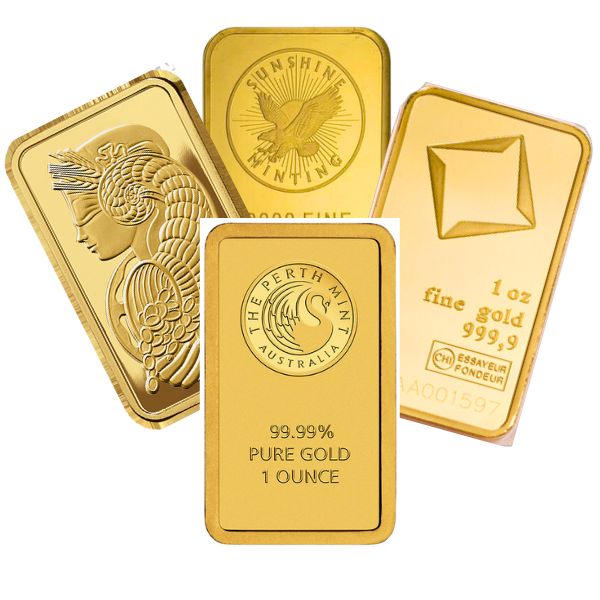
- Bars. Precious metal bars are bullion products usually shaped like rectangles, squares, or trapezoids. These products seldom include the intricate artwork and high production value associated with coins, but gold and silver bars are also often sold at lower premiums over melt value.
- Jewelry. Although jewelry is not usually considered an efficient way to invest in precious metals, much of the world’s supply of mined gold eventually makes it way into bracelets, necklaces, earrings, and other pieces of jewelry.
Which type of precious metal and bullion product should you choose for investing? To answer these questions, take some time to consider your investing goals, personal preferences, and budget.
“Paper” Precious Metals Explained
Another option for investing in precious metals is to purchase “paper” versions of gold, silver, or platinum. Paper gold or silver refers to methods of investing in the current price of either metal without physically taking possession. A silver stock, for example, may be pegged to the price of silver, so investors in the stock will gain money when the price of silver increases.
Paper precious metals, including precious metal ETFs and futures, can be a great way to to invest in these safe haven assets without dealing with the hassles of physical precious metal ownership. Owning physical precious metals requires investors to make plans for storage, insurance (if applicable), and more.
However, investing in paper precious metals also introduces more counterparty risk to your portfolio. Counterparty risk refers to the risks associated with other members of a financial contract failing to meet their obligations to you. When an investor owns and securely stores their gold and silver, they are wholly responsible for their own safe haven assets. When you start dealing with stocks, futures, and other forms of paper precious metals, you inject more counterparty risk into your investments.

How Much Gold or Silver Should You Own?
So, how much gold or silver should you own? Many financial advisors recommend keeping 5-10% of your portfolio in precious metals like gold and silver, but there’s no universal rule for how much gold or silver investors should own. Instead, we recommend tailoring your investment portfolio’s composition to your specific needs and investment goals.
As you learned on this page, gold and silver are safe haven assets, which means that they tend to retain value during periods of inflation, instability, or uncertainty. As such, these stable and intrinsically valuable assets can be excellent counterbalances to riskier investments like cryptocurrency, technology stocks, or other volatile assets. In other words, the riskiness of your portfolio can sometimes play a role in determining how much gold or silver you should own.
Finally, we recommend that investors consider time horizon when trying to figure out how much gold or silver they want to buy. Your time horizon refers to the expected amount of time it will take before you hope to reach your financial goals. Typically, your age and investing time horizon go hand-in-hand. An older investor has a shorter time horizon, while a younger investor has a longer time horizon.
Investors with a shorter time horizon are typically advised to invest in more safe haven assets like gold and silver, since these products are usually considered relatively low-risk. By contrast, investors working with a long time horizon can invest in fewer low-risk investments, since they have plenty of time to chase profits and re-earn losses from risky calls.
Final Thoughts: What is a Safe Haven Asset?
Safe haven assets are investments that tend to either retain or gain value during periods of heightened inflation, instability, or uncertainty. The best safe haven assets, including gold, are intrinsically valuable and have long histories of use as stores of value.
Whether you’re a new investor or a lifelong gold and silver stacker, Hero Bullion helps you get the precious metals you need at prices you’ll love.
You might also be interested in:


About The Author

Michael Roets
With over six years of experience reporting on precious metals, Michael Roets covers market news, buying guides, and commentary for Hero Bullion.