
Does Gold Rust Or Tarnish?

At a Glance:
-
- In its purest form, gold will never rust or tarnish.
- Most gold products are less than 100% pure, though, so they may tarnish over time.
- Gold investors can slow down the tarnishing process if they’re careful, but all gold can tarnish.
- On this page, learn more about how gold rusts or tarnishes – and how you can prevent it.
Does Gold Rust Or Tarnish?
No investor wants to see their gold coins, bars, or jewelry tarnish. Unfortunately, tarnishing is a relatively natural chemical reaction that occurs when the non-gold alloys in a gold product are exposed to oxygen for an extended amount of time. On a long enough timeline, almost all gold products will tarnish – it’s just a matter of when.
One common misconception is that real gold can never tarnish. It is true that 100% pure gold won’t tarnish, but 100% pure gold products don’t actually exist, since gold is liquid at a fineness of 100%. Since all gold is an alloy of more than one metal, gold coins, jewelry, and bars can tarnish over time when exposed to oxygen.
On this page, we’ll talk about the differences between rust and tarnish, whether gold tarnishes, and a few things investors and collectors can do to keep their gold looking perfect for as long as possible.
Rust vs. Tarnish on Metals – What’s the Difference?
The terms rust and tarnish are often used interchangeably, but they actually have two different meanings. Tarnish and rust both happen when a metal is exposed to the air, but the difference is which metal is impacted. Rust refers to the chemical reaction of iron-based metals to the air, while tarnish describes the process for all other metals. Gold jewelry can tarnish but it does not rust, since rust refers to iron-based metals.
Another difference between rust and tarnish involves how deeply the impact of the air exposure goes. Rust can destroy a metal, since it ‘eats away’ at the metal from its surface to the interior. Tarnish, the type of chemical reaction that happens to gold and silver, only affects the surface of your coin, bar, round, or jewelry piece. This should be a relief for precious metal investors. The tarnish on your collectible gold or silver coins won’t destroy your investment, even if it looks unsightly!
Now that we know what we’re dealing with – tarnish rather than rust – let’s take a look at what causes tarnish on gold products.
Does Gold Tarnish?
Can gold tarnish? This question is actually a bit trickier than you might think. The short answer is that gold can tarnish, depending on its purity.
Technically, gold itself never tarnishes. But 100% pure gold is only available in liquid form, so all commercially sold gold products and investments are actually alloys of gold and another metal, usually silver. Since silver can tarnish, this means that gold bars, coins, and jewelry pieces can technically tarnish over time.
It is rare to see a 99.9% or 99.99% pure gold product tarnish, since the amount of silver in these items is so small. Over a long enough period of time, though, even the purest gold products can theoretically tarnish. That being said, gold is an extremely stable metal and it is uncommon for a 24-karat gold product to tarnish quickly.

My Gold Tarnished – Does That Mean It’s Fake?
Seeing your gold coin, bar, or jewelry tarnish doesn’t necessarily mean that it is fake. Especially for gold products that are less than 24-karat in purity, tarnishing can happen naturally over time. In fact, coin collectors and bullion dealers often refer to tarnish on coins as toning. In some cases, the toning on a silver or gold coin can actually increase its value!
Still, quick or extensive tarnishing on a brand new 99.99% gold can should be cause for concern. If you notice that your gold investment has quickly tarnished, or if the tarnish seems to be all over the coin, consider bringing it to your local coin shop for a quick test. Coin and bullion dealers can use a sigma tester to confirm that your investment is actually made out of pure gold.
In most cases, though, you don’t need to worry if you see a bit of tarnish or toning on your gold coin, bar, or jewelry.
Preventing Gold From Tarnishing
While most gold can tarnish eventually, you can use a couple of strategies to try to prevent tarnishing for as long as possible. Here are the two best things you can do to keep your gold looking its best:
- Buy 24-karat (99.99% pure) gold.
- Keep your gold secure from the elements.

Buy 24-Karat Gold
The single best way you can prevent your gold from tarnishing is to buy the purest gold possible. Although 100% pure gold would be ideal since gold itself does not tarnish, it isn’t possible to buy truly pure gold unless it’s in liquid form. Instead, the purest gold generally possible is 24k gold, which is 99.99% pure. The Royal Canadian Mint occasionally produces gold coins that are 99.999% pure, but the difference in susceptibility to tarnish between .9999 and .99999 fine gold is likely negligible.
Try to buy gold coins, bars, and jewelry products that are 99.9% pure or higher. The minimal amount of non-gold metals in these highly pure gold products makes tarnishing far less likely. While we love the look and durability of .9167 Gold Krugerrands and Gold Eagles, these coins are slightly more likely to tarnish over time than the purer coins on the market.
We very rarely see 99.9% or 99.99% pure gold products tarnish.
Keep Your Gold Secure
This tip should go without saying, but make sure to keep your gold out of the elements as much as possible. The tarnishing process can be sped-up if your metals are exposed to chemicals like perfume or body lotions, and dipping your gold too frequently in water may make it tarnish faster, depending on its purity and alloy metals.
We recommend storing your gold in a dry, cool place free of humidity. However, most pure gold products won’t tarnish easily, so you don’t need to go overboard when planning how to store your gold!
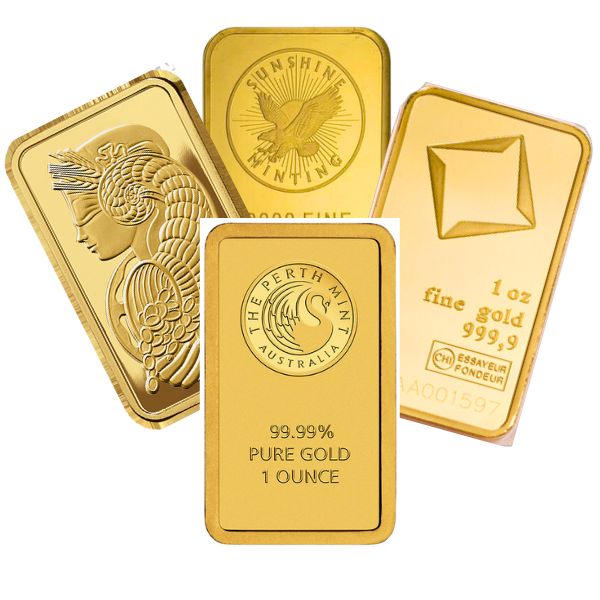
Should You Clean Tarnish Off Gold?
Whether you should clean the tarnish off of your gold depends primarily on which gold product you have in mind. Cleaning tarnish off of gold jewelry is common and considered perfectly acceptable, since jewelry is valued based on both its appearance and gold content. Gold bars can also sometimes be cleaned, since very few gold bars are worth a large premium over melt value.
Gold coins are a different story entirely, especially if you collect old gold coins from before 1933. These old coins are sold at a numismatic premium, which is a small (or very large) additional fee added to the melt value of a coin when you buy or sell it.
If you’re a new investor, the idea that you shouldn’t clean your coins may seem counterintuitive. After all, who wouldn’t want their coins to look their very best? The answer has to do with the effects of cleaning. Cleaning a gold coin can destroy its natural patina, or tarnish, and a rough cleaning leaves very small scratches on its surface while erasing the coin’s original mint luster.
Coin collectors can spot a cleaned gold coin from a mile away, and a cleaned gold coin can lose a considerable amount of market value.
Long story short, you can clean gold jewelry and some gold bars, but try to leave your old gold coins untouched!
Final Thoughts: Gold Tarnishes… Sometimes.
Because gold itself does not tarnish, some investors believe that their gold bars, coins, or jewelry won’t ever develop the surface-level imperfections we call tarnishing. While this is often true for the purest gold (24-karat), all gold can eventually tarnish. Only 100% gold is exempt from the natural tarnishing effect, and don’t expect to find 100% pure gold at your local coin shop!
At the end of the day, tarnishing sounds a lot scarier than it is. A good tarnished tone can increase the value of some gold coins and, unlike rust, tarnish sticks to the surface of a gold product and won’t destroy its insides.
You might also be interested in:


About The Author

Michael Roets
With over six years of experience reporting on precious metals, Michael Roets covers market news, buying guides, and commentary for Hero Bullion.