
Money Troubles: Here’s How Much U.S. Coins Cost To Mint

At a Glance:
-
- President Donald Trump has suggested the elimination of the one-cent penny.
- The coin is currently more expensive to produce than it is worth.
- On this page, learn more about the proposal – and how much it costs to produce other U.S. coins.
How Much Does it Cost to Mint U.S. Coins?
This week, U.S. President Donald Trump announced that he has instructed the Treasury to discontinue the production of pennies as part of the administration’s broader cost-cutting initiatives. The proposal is certainly not unique to the new administration. Experts have suggested eliminating the one-cent coin for years, citing the fact that it actually costs 3.7 cents to make each penny introduced into circulation. That’s right – manufacturing pennies is actually unprofitable for the United States Mint. The U.S. Mint lost around $85.3 million producing pennies in 2024, a number that is expected to increase as copper and zinc become more valuable and inflation more harsh.
The Department of Government Efficiency, an auditing organization created by President Trump and headed by billionaire Elon Musk, backed the proposal. According to Mr. Musk, eliminating the penny from production would save the U.S. Mint – and taxpayers – millions of dollars annually. While experts say that removing the one-cent coin from circulation may be a bit more complicated than President Trump has suggested, the move brings up an interesting question.
Is the penny the only unprofitable coin the U.S. Mint produces? The penny isn’t alone in costing more to produce than its face value is worth. Dimes, quarters, and half-dollars are all worth more than they cost to produce, but the U.S. Mint operates at a loss when minting pennies and nickels. Will the nickel be the next coin axed as the Trump administration takes aim at unprofitable government operations?
On this page, learn more about how much it costs to produce pennies, nickels, dimes, quarters, and half dollars.
Coin Costs – Here’s What the U.S. Mint Spends To Produce Pocket Change
The Trump administration may be pushing to eliminate the unprofitable penny from the U.S. Mint’s product line, but the one-cent piece isn’t the only coin that costs more to produce than it’s worth. Below, let’s take a look at how all circulating U.S. coins stack up in terms of profitability to get a better idea of which U.S. Mint products may be on the chopping block next.
| Coin (Value) | Cost to Produce (Profit/Loss) |
|---|---|
| Penny ($0.01) | $0.037 |
| Nickel ($0.05) | $0.138 (-$0.088) |
| Dime ($0.10) | $0.0576 (+$0.0424) |
| Quarter ($0.25) | $0.147 (+$0.103) |
| Half Dollar ($0.50) | $0.34 (+$0.16) |
Cost to Produce a Penny
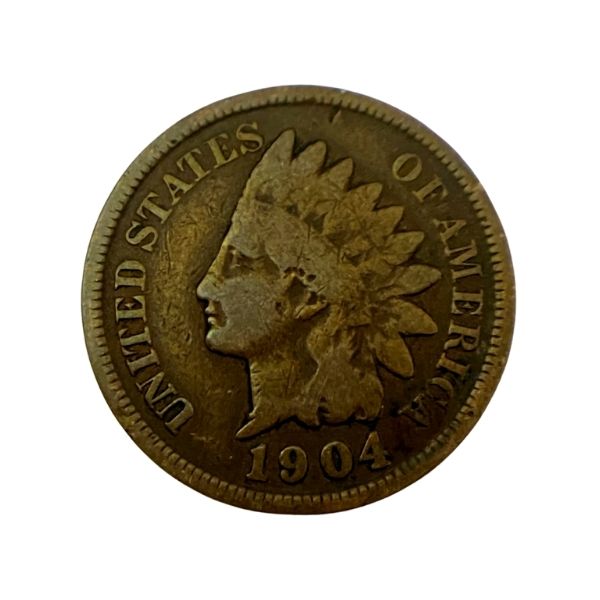
First produced in 1793, the penny is a one-cent coin manufactured by the United States Mint under the authority of the U.S. Treasury. The coin is now unprofitable, which means that the U.S. Mint loses money on each penny it produces, but it wasn’t always this way. The United States Mint began losing money producing pennies in 2006, when the melt value of copper per penny finally outpaced the coin’s face value of one cent.
Today, a penny is worth one cent but costs 3.7 cents to produce, making it a net loss for the U.S. Mint.
Why Do Pennies Cost So Much to Make?
Several costs are involved in the production of a United States penny, but the number one cause behind the rising price of minting pennies is the climbing costs of metals. Modern pennies are made using zinc and copper, which are two metals that have increased in value over the past decade. The cost of labor, transportation, and other overhead costs incurred by the U.S. Mint also contribute to the total implied cost of producing a penny.
Inflation also plays a role in the decreasing profitability of the one-cent coin. During the early days of the American economy, a strong United States dollar meant that pennies were still a valuable medium of exchange. Today, many Americans don’t even consider pennies to be worth enough money to justify the time spent picking one off of the ground. As a result, the buying power of a single cent continues to decrease while the cost incurred to manufacture one only gets higher.

Why DOGE Wants to Eliminate Pennies
Headed by billionaire tech mogul Elon Musk, the Department of Government Efficiency (DOGE) is a newly created organization intended to review expenditures and advise President Trump on his administration’s broader objective to cut costs and improve the financial efficiency of the United States government.
The organization recommended that President Trump trim federal spending by eliminating the penny last month, a suggestion which culminated in the administration’s decision to direct the Treasury to do just that this week. Mr. Musk’s justification for eliminating the penny from circulation is certainly not a new argument; Economists have suggested for years that the unprofitability of the penny would justify removing it from the U.S. Mint’s production catalog.
So why does DOGE want to get rid of pennies? The Department of Government Efficiency advocates eliminating the penny because each penny costs more to produce (3.7 cents) than it is worth (1 cent).
How Much Does a Nickel Cost to Make?
Nickels may be the next coin to enter the spotlight as Donald Trump’s government examines ways to trim costs in the federal government. Like the penny, it costs more to produce a nickel than the five-cent coin is worth. How much does it cost to produce a nickel? Each nickel is worth only five cents but costs 13.8 cents to produce, a net loss of 8.8 cents per coin.
The rising cost of producing nickels is a relatively new phenomenon. Russia’s 2022 invasion of Ukraine caused the price of nickel, a core wartime precious metal, to climb rapidly. As a result, the cost of procuring the metal required to manufacture nickels has made the coins unprofitable for the United States Mint to produce.
Will the Government Eliminate Nickels Next?
While eliminating the penny seems like a distinct possibility, getting rid of America’s five-cent piece is a bit trickier. Without the nickel, the lowest denomination available to give or receive change for a purchase would be the dime, which is worth ten cents. In the event that a coin were eliminated from circulation, businesses would likely need to either cease accepting cash or, more likely, round prices up to avoid needing a currency unit that does not exist.
In practice, eliminating the penny likely means that items costing 99 cents would begin to cost one dollar. But if the nickel were also eliminated, the cost of goods may rise by more than just a single cent. All prices would need to be divisible by ten cents at the very highest, meaning that some items may inflate by four or more cents. This may not seem like a large increase, but economists warn that it would disproportionately impact low-income families prone to making purchases in cash.
Government officials, analysts, and economists disagree about the feasibility – or even the legality – of President Trump’s order to cease the production of pennies. But if DOGE comes for the nickel next, expect the legal and logistical battle to become even more complex.
Which Coins Are Profitable For the U.S. Mint?
Pennies and nickels may be loss leaders for the U.S. government, but the same cannot be said for other U.S. currency units. Dimes cost only 5.76 cents to produce, making them worth around 4.24 cents more than it costs the U.S. Mint to manufacture them. Quarters are an even larger money-maker for the U.S. Treasury, clocking in at a face value of 25 cents and a production cost of only $0.147 each. The U.S. Mint also profits about $0.14 per half dollar, which costs 34 cents to manufacture.
The penny and, eventually, the nickel, may be on the chopping block as the Department of Government Efficiency proposes cost-saving measures for the federal government, but dimes, quarters, and half dollars remain profitable enough to avoid elimination.
Criticisms of Eliminating Pennies
Although several politicians have proposed that the penny be removed from circulation, the idea is not without controversy. The fiscal consequences of “rounding” prices to account for the loss of the penny, implications for the copper melting industry, and the loss of a core part of commemorative American history are three major reasons why some people disagree with proposals to eliminate the penny.
The Rounding Effect
As we covered earlier, eliminating the penny would force businesses to adjust their prices. In a post-penny economy, giving physical change would not be possible for purchases that are indivisible by 5, 10, 25, or 50. As a result, expect businesses to round their prices up if pennies are no longer considered legal tender. It may not seem like a lot, but this rounding would amount to an additional “rounding tax” on many products Americans rely on.
Experts say that this rounding tax would likely most impact poor Americans, who tend to disproportionately rely on cash for their daily purchases. Economists are divided on the precise impacts that might arise if President Trump is successful in his attempts to eliminate the unprofitable penny from circulation, but the decision could also pave the way for the elimination of the costlier nickel.
Copper Hoarding and Melting
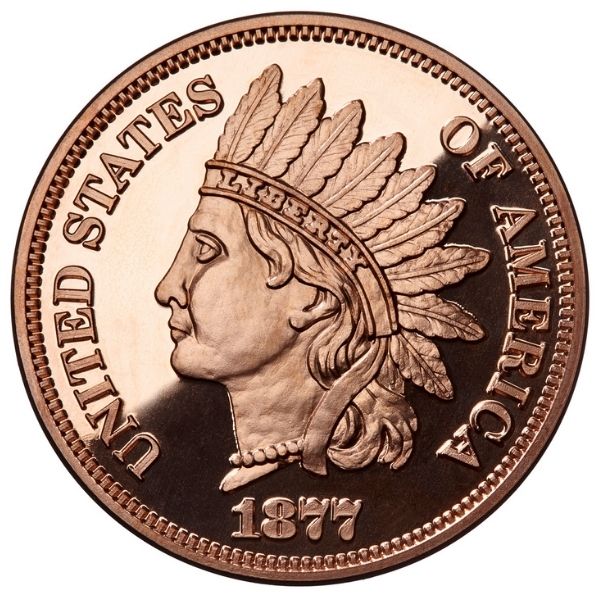
Another major question about eliminating the penny involves the metals that pennies contain. Both zinc and copper are valuable metals that can be melted down and sold, which is part of the reason why pennies cost more to produce than they are worth. U.S. law prohibits citizens from melting down currency, including pennies, but that may change if the Treasury eliminates the one-cent piece from circulation.
The sheer volume of pennies in circulation could create a profitable cottage industry for melting and selling their metals. How – and to what extent – this influx of copper and zinc would impact the prices of those metals is unclear but presents another pressing question for policy analysts to consider.
Heritage and Culture
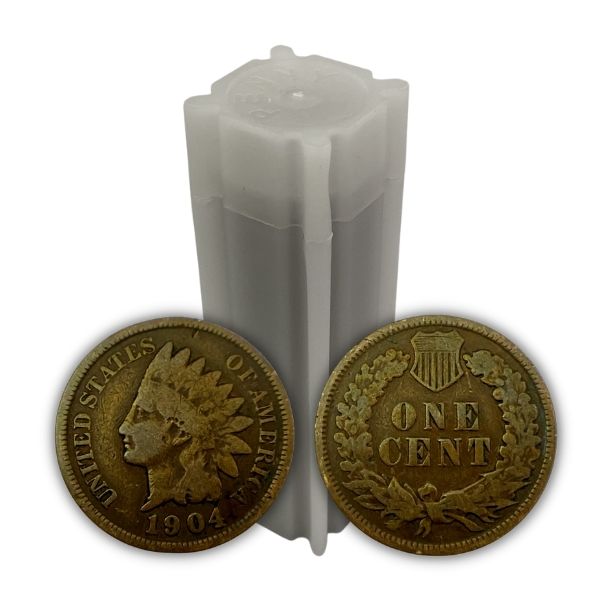
Perhaps the most persuasive argument against eliminating the penalty is the impact it would have on American culture and heritage. The Lincoln Memorial penny, the current design for the one-cent piece, pays homage to one of the greatest leaders in American history, Abraham Lincoln. Eliminating the penny would remove the cultural touchstone from circulation, a move that some historians advise against.
Of course, it is always possible for the Trump administration to order the creation of a new unit of currency in order to pay homage to Lincoln without losing money through the minting process. However, expect some pushback from historians and some coin collectors if the penny is really slated for elimination.
Why it Makes Cents To Ditch Cents
Despite a few arguments to the contrary, analysts say that eliminating pennies might make sense for a few different reasons. For the average consumer, inflation has rendered pennies nearly worthless. Additionally, the annual savings if we were to eliminate the penny from production might amount to a sizable benefit to the American taxpayers.
The United States would not be the first country to eliminate the penny. Canada removed its version of the one-cent denomination from production in 2012, and Canadians saw the coin officially removed from circulation the next year in 2013.
Final Thoughts: Will 2025 See the End of the Penny?
The Trump administration is expected to take official steps to cease the production of the United States penny at some point this year – and economists say the change is not especially surprising. A penny is nearly worthless given the inflationary economy in the United States, and the coin costs nearly four times its face value to produce.
If the penny really is on the chopping block, the mint’s other unprofitable coin – the nickel – could potentially be next!
You might also be interested In:


About The Author

Michael Roets
With over six years of experience reporting on precious metals, Michael Roets covers market news, buying guides, and commentary for Hero Bullion.