
A Brief History of the United States Mint

At a Glance:
-
- The U.S. Mint was officially established on April 2nd, 1792.
- For over 230 years, the U.S. Mint has produced the currency of the United States.
- On this page, learn about the founding, history, and purpose of the U.S. Mint.
A Brief History of the United States Mint
Working under the Department of the Treasury, the United States Mint’s main job is to produce currency for the U.S. economy in the form of coins. Today, the U.S. Mint also mints a range of popular bullion coins for investors, including the American Eagle coins in gold, silver, and platinum, the American Gold Buffalo, and commemorative precious metal coins.
Operating continuously for over 230 years since its establishment in April of 1792, the U.S. Mint has grown with the U.S. economy to become one of the largest government mints in the world. In 2023 alone, the United States Mint produced more than 13 billion coins for circulation, making it one of the global economy’s most efficient mints.
The beginnings of the U.S. Mint were far more humble, though. In its first year of operation, 1792, the mint produced only a couple thousand coins as the U.S. economy attempted to establish itself and the mint itself worked on its procedures for currency manufacturing.
It took 233 years for the small U.S. Mint to become the global powerhouse that it is today. And on this page, you’ll learn more about the history of the U.S. Mint, as well as the coins, people, and procedures that make it such a unique American institution.
The Early Years of the U.S. Mint
Prior to the establishment of the modern United States Mint in 1792, the U.S. government produced a limited number of coins beginning in 1787. The mint behind this coin, which was modeled after the earlier Continental dollar, was established in 1782 during the Congress of the Confederation.
Although this initial mint was a precursor to the official U.S. Mint that exists today, the Fugio cent is widely considered the first example of a mass-produced circulating United States coin. Although the U.S. Mint has since released hundreds of different designs on dozens of circulating coin denominations, everything started with the strange Fugio cent.
Fugio Cent – The First U.S. Coin
Until very recently, the Fugio cent was not considered to be a true regular-issue U.S. coin. This changed in 2022, when grading services like NGC and PCGS officially reclassified it as a genuine regular issue. Numismatists now believe that the Fugio cent was the first general circulation coin minted in the United States.
The Fugio cent was minted in very limited numbers in 1787. The coin features a variety of patterns. On the obverse, the Fugio Cent depicts a sundial below a sun, as well as the inscription “MIND YOUR BUSINESS. The reverse of the Fugio cent features the phrase “WE ARE ONE” surrounded by 13 chain links, which were likely meant to represent the 13 original U.S. colonies.
It is not known who designed the Fugio cent, which has become a favorite for collectors of early U.S. coins. According to some sources, the coin was designed by Benjamin Franklin, American founding father and inventor.

Beginnings – The Coinage Act of 1792
After winning its war for independence, the United States experienced rapid growth in its economy. As such, the budding nation needed a way to reliably produce circulating currency for its citizens. Passed on April 2nd of 1792 and signed into law by President George Washington on the same day, the Coinage Act of 1792 officially established the United States Mint.
Aside from founding the U.S. Mint, the Coinage Act of 1792 set the foundation for the American coinage system. Perhaps most importantly for coin collectors, the Coinage Act of 1792 established the design requirements for all future U.S. coins. As the law stipulated, the obverse of each circulating American coin must feature a design “emblematic of liberty.” As coin collectors know, depictions of liberty on U.S. coinage are exceptionally varied. On the reverse, coins are required to feature some sort of eagle depiction.
The 1792 Coinage Act also established the denominations of circulating U.S. coins:
- Eagle Gold Coin ($10 Face Value).
- Half Eagle Gold Coin ($5 Face Value).
- Silver Dollar ($1 Face Value).
- Half Dollar ($0.50 Face Value).
- Quarter Dollar ($0.25 Face Value).
- Disme or Dime ($0.10 Face Value)
- Half Disme or Dime ($0.05 Face Value).
- Cent or Penny ($0.01 Face Value).
- Half Cent ($0.005 Face Value).
The Director of the U.S. Mint
The Director of the U.S. Mint is the highest position appointed in the U.S. Mint system. The President of the United States is responsible for appointing the Director of the U.S. Mint. This position was first established in 1792, shortly after George Washington signed the Coinage Act of 1792 into law.
The first Director of the U.S. Mint was David Rittenhouse, who played a major role in building the United States Mint’s first building, which was in Philadelphia. To date, the U.S. Mint has had 40 official directors. Kristie McNally became the acting Director of the U.S. Mint under President Donald Trump in March of 2025.

Under the Department of the Treasury
Surprisingly, the U.S. Mint has not always functioned under the Department of the U.S. Treasury. The United States Mint was initially under the leadership of the State Department until it became independent starting in 1799. Decades later, the U.S. Mint became a subsidiary agency of the Department of the Treasury after the passage of the Coinage Act of 1873.
The Coinage Act of 1873
Aside from ending the independence of the U.S. Mint in favor of the Department of Treasury’s leadership, the Coinage Act of 1873 contained several provisions that permanently altered the state of United States coinage and American economic policy.
Commonly called the “Crime of ’73,” the Coinage Act of 1873 abolished the practice of free silver. Prior to this law, Americans could turn their silver bullion into the U.S. Mint to have it made into silver dollars. The Coinage Act of 1873 eliminated the free silver policy in the United States, creating a de facto gold standard.
This move was highly controversial, and it even sparked a political party, aptly named the Free Silver Party, whose candidates ran on a platform of returning the U.S. to its former bimetallic system of both gold and silver coins-on-demand.
Increased and Expanded Production
Gold rushes, increased economic activity, and the growing strength of the United States dollar led to a period of massive growth for the U.S. Mint beginning in the mid-19th century. New minting and manufacturing inventions in the 20th century also bolstered the U.S. Mint’s production capabilities.
During the 19th and early 20th centuries, the U.S. Mint also experimented considerably with coin designs. Several iconic new coins were introduced in this period, and coin collecting began to surge in popularity beginning in the mid-19th century. Throughout several points in the past 200 years, the U.S. Mint has been forced to remove, change, or increase production of certain coins in response to shortages caused by collectors.
The End of Precious Metal Coinage
The next major overhauls of U.S. Mint operations happened in the 20th century. As the value of precious metals continued to climb, United States officials began to question the feasibility of using gold and silver in circulating coins. Two main pieces of legislation in the 20th century led to the end of precious metals in most circulating U.S. coins:
- Executive Order 6102 (1933). This order banned the private possession of most gold products and removed all gold from circulating U.S. coins.
- Coinage Act of 1965. The Coinage Act of 1965 removed silver from circulating U.S. dimes, quarters, and dollars. It also reduced the silver content of the U.S. half dollar to 40%.
Together, these two decisions fundamentally changed the operations of the U.S. Mint, ending a century-plus tradition of minting circulating coins using real silver and gold.
Executive Order 6102 (1933) – The End of the Gold Standard
During the Great Depression, President Franklin D. Roosevelt believed that gold hoarding was making it difficult for the economy of the United States to recover. Executive Order 6102, signed into law on April 5th, 1933, banned private citizens from holding gold.
Perhaps more importantly, Executive Order 6102 eliminated gold from circulating U.S. coins. 1932 was the last year that circulating U.S. gold coins were produced by the United States Mint, with the exception of the near-mythical 1933 Saint-Gaudens Gold Double Eagle, all but one of which are illegal to own or trade.
Like the “Crime of ’73,” Executive Order 6102 was highly controversial. It set the stage for the end of the gold standard in the United States and the beginning of free-floating fiat currencies around the world.

Coinage Act of 1965 – Silver Removed From U.S. Coinage
Another major change for U.S. Mint operations happened in 1965 with the passage of the Coinage Act of 1965. The Coinage Act of 1965 removed silver completely from the following circulating U.S. coins:
- U.S. Dime.
- U.S. Quarter.
- U.S. Dollar Coin.
The U.S. half dollar’s silver content was also reduced from 90% to 40%, which continued until all of the coin’s silver was removed in 1971. The U.S. dime, quarter, and all circulating dollar coins were formerly 90% silver and contained no silver beginning in 1965.
Today, circulating U.S. coins are made with 0% real silver. Most U.S. coins are instead alloys of several base metals, including zinc, copper, nickel, and others.
The Era of Bullion Coinage
Although the U.S. Mint’s silver and gold circulating coins were eliminated in 1933 and 1965, respectively, the modern United States Mint produces a considerable amount of gold, silver, platinum, and other precious metal coins for investors around the world.
The first American bullion coins to hit markets were the American Gold Eagle and American Silver Eagle, both of which premiered in 1986 and experienced immediate popularity among investors. Since then, producing bullion coinage for investors has become one of the U.S. Mint’s most vital (and profitable) functions.
The First U.S. Bullion Coins
U.S. bullion coinage in the modern era began with the American Gold Eagle and American Silver Eagle, both of which were first released in 1986.
The American Gold Eagle is minted with 91.67% gold and features Augustus Saint-Gaudens’ iconic portrait of Lady Liberty on the obverse. On the reverse, the Gold Eagle originally depicted an eagle in flight. This reverse side changed in 2021, when the flying eagle was replaced with Jennie Norris’ depiction of a bald eagle’s close-up portrait.
The American Silver Eagle, minted with 99.9% fine silver, is the official silver bullion coin of the United States and one of the world’s most popular silver coins. Its obverse depicts Adolph A. Weinman’s iconic “Walking Liberty” artwork, which first appeared on the Walking Liberty half dollar in 1916. The reverse of the American Silver Eagle also received a makeover in 2021, when the original heraldic eagle design was replaced with an eagle in flight.

Modern U.S. Mint Gold, Silver, and Platinum Coinage
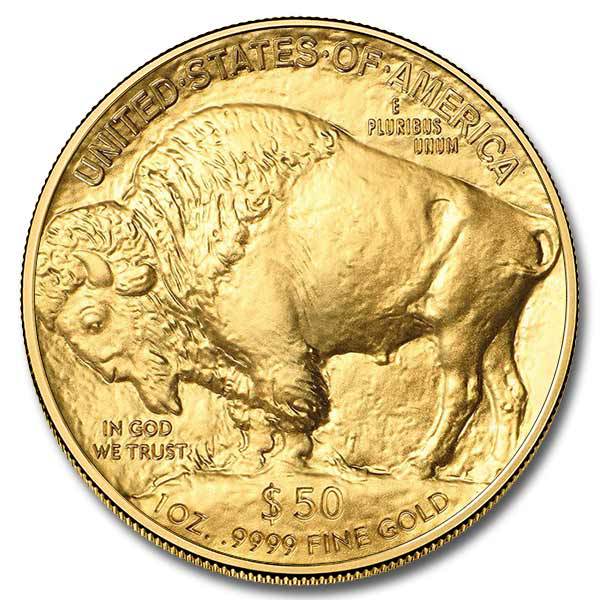
Following the success of the American Gold Eagle and American Silver Eagle, the U.S. Mint substantially expanded its bullion coin offerings. Another iconic American coin, the 99.99% pure American Gold Buffalo, premiered in 2006 and remains the purest annual-release gold coin in the United States.
The U.S. Mint also introduced the American Platinum Eagle in 1997, as well as the American Palladium Eagle in 2017. Now, the U.S. Mint offers a wide range of proof, reverse proof, bullion, and uncirculated editions of its most popular bullion coins in multiple precious metals.
Buying U.S. Mint Bullion Coins
Hero Bullion is a leading online distributor of U.S. Mint bullion coins. Take advantage of industry-leading pricing, fast shipping times, and even free shipping on qualifying orders when you shop U.S. Mint coins with Hero Bullion!
Final Thoughts: U.S. Mint History Explained
The U.S. Mint is one of the oldest American institutions. Founded in 1792, the United States Mint’s main role is to produce coins for the United States economy. Although the mint has changed and evolved over the 230+ years of its history, it remains an important part of American economics, culture, and identity.
Today, the U.S. Mint is as well known for its bullion coins, including the American Gold, Silver, and Platinum Eagle, as it is for the nickels, dimes, and quarters it produces annually.
You might also be interested in:


About The Author

Michael Roets
With over six years of experience reporting on precious metals, Michael Roets covers market news, buying guides, and commentary for Hero Bullion.