
15 Rare Quarters Worth Money (2026 Value Guide)

At a Glance:
-
- Rare quarters can be worth thousands of dollars, depending on date, mint mark, condition, and errors.
- Quarters dated 1964 or earlier are 90% silver and are worth at least melt value.
- The biggest money is usually in key dates, overdates, famous modern error coins, and early U.S. rarities.
- On this page, learn which coins are worth money and how to identify them.
Rare Quarters Worth Money
Rare quarters can be worth tens of thousands of dollars or more. A standard silver quarter in moderate condition is typically worth $10-20, depending on the current spot price of silver. Rare, numismatically valuable quarters can be worth considerably more, depending on their rarity, condition, and other factors.
While the vast majority of quarters are only worth $0.25, certain quarters are very valuable. To identify a rare quarter, pay attention to your coin’s designs, date, and condition. Certain early U.S. quarters and key dates are worth a considerable amount of money, and quarters minted in 1964 or earlier are made of real silver and are worth at least their melt value.
On this page, learn more about rare quarters worth money – and how to identify them.
How to Tell If Your Quarter is Valuable
Most valuable quarters fall into two main categories: rare quarters and standard silver quarters. Rare quarters have collectible value, with some of the rarest quarters in American history being worth tens of thousands of dollars. Quarters minted before 1965 were made with 90% silver and are worth at least their melt value, which is currently around $10-11 and fluctuates based on the current spot price of silver.
Rare quarters have numismatic value, which means that they are valued for their rarity, condition, or historical importance. The most valuable U.S. quarters are early quarters with extremely limited mintages. These coins can sell for tens of thousands of dollars, depending on their condition.
Silver quarters are the other category of valuable quarter dollars. A silver quarter is typically only worth its melt value in silver, but some rare silver quarters also carry numismatic value. Compared to rare quarters, silver quarters are relatively common to find in old coin or spare change collections. This makes them a great target for regular Americans who want to find valuable coins in their homes.
To identify rare quarters or silver quarters, you’ll need to take a look at each coin’s designs, date, mint mark, and condition.

Identifying Silver Quarters
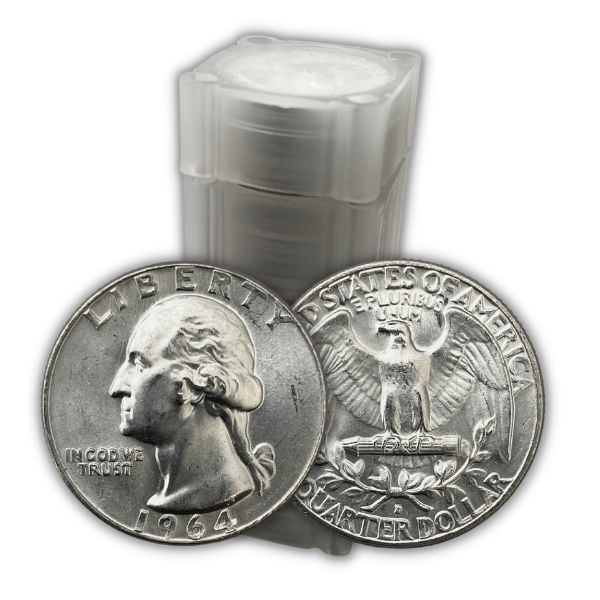
Silver quarters are the easiest quarters worth money to find, since so many of these coins exist. All U.S. quarters minted in 1964 or earlier were composed of 90% silver. A silver quarter is worth approximately $10-11, although exact values vary based on the current spot price of silver and ranged from $10-20 throughout 2026.
Identifying a silver quarter is very easy. Since quarters minted prior to 1965 are always silver, just look for quarter dollars dated 1964 or earlier. On the Washington quarter, this date is located on the obverse side underneath George Washington’s bust.
At a quick glance, you can also sometimes identify a silver quarter by taking a look at its edge. A genuine silver quarter will have a silver color throughout the edge, while non-silver quarters feature a copper-like color in the center of their edges with a silver color on the top and bottom.
The Washington quarter is the only series of quarters to not feature 90% pure silver throughout its entire run. If your quarter is genuine and features any design predating Washington’s, it is made with 90% silver. This includes the Draped Bust quarter (1796-1807), Capped Bust quarter (1815-1838), Seated Liberty quarter (1838-1891), Barber quarter (1892-1916), and the Standing Liberty quarter (1916-1930). These coins are always 90% silver, regardless of date.
Silver quarters are typically worth little more than their melt value in silver. With the exception of early U.S. quarters minted prior to 1873, American quarter weights are standardized at 6.25 grams, giving them a total silver weight of 5.625 grams (approx. 0.1808 troy ounces). To find the melt value of a silver quarter, multiply its weight in troy ounces by the current spot price of silver.
Rare Quarters to Look Out For
While standard, common silver quarters are usually worth little more than melt value, rare quarters can be worth a lot of money. The most valuable quarters are extraordinarily rare and unlikely to be hiding in the average person’s spare change drawer.
Rare quarters are valued for more than just their silver content. The value of a rare quarter dollar hinges on several factors, including its date, mint mark, and condition. The most valuable rare quarters feature mint-made errors, key dates, or extremely limited mintages.
Because of their value, rare U.S. quarters are a major target for counterfeiters. If you think you’ve found a rare and valuable quarter, consider submitting it to a grading company like PCGS or NGC for verification before trying to sell it.
Early Quarters
The most valuable rare quarters come from the earliest era of American history. Minted during the late 18th and early 19th centuries, these coins are unlikely to pop up in your average coin collection or spare change drawer.
These coins are highly valued in any condition, although highly graded specimens fetch even higher prices at auction. Fakes are more common in this category of rare quarter dollars, since these coins are so valuable.
Here are some of the most valuable rare quarters worth money from early U.S. history.
| Coin | What to look for | Value |
|---|---|---|
| 1796 Draped Bust | The first U.S. quarter. Only year of the type, ~6,100 struck. | $15,000 – $165,000+ (7-figures for top examples) |
| 1823/2 Capped Bust | Overdate error. A 2 is visible beneath the 3 in the date. | $25,000 – $250,000+ |
| 1804 Draped Bust | ~6,700 struck. Key date of the Draped Bust series. | $3,000 – $150,000+ |
Values are highly grade-dependent and counterfeits are common. Have any suspected early quarter authenticated and graded by PCGS or NGC before buying or selling.
Barber Quarters (1892-1916)
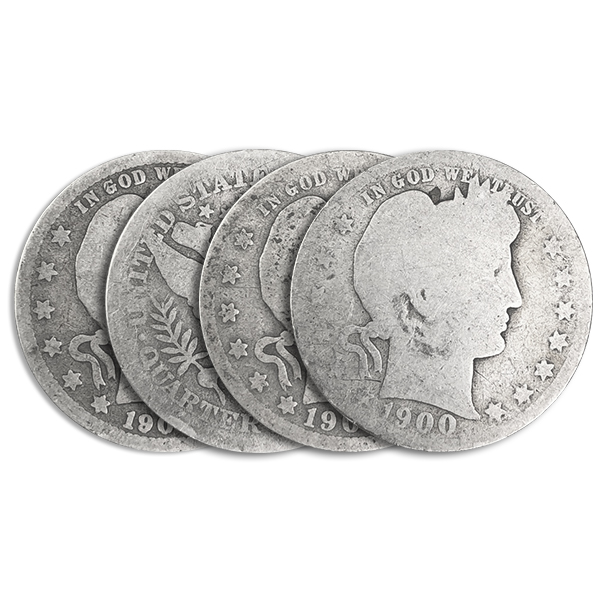
The Barber quarter was a 90% silver quarter dollar minted in the United States from 1892 until 1916. Barber quarters are highly desired by some collectors, with key dates in the series fetching high prices at auction.
While barber quarters may occasionally make their way into circulation after large collections are liquidated, you’re not likely to find these valuable U.S. quarters in your collection or coin drawer at home.
| Coin | What to look for | Value |
|---|---|---|
| 1901-S Barber | The series key. Lowest business-strike mintage (~72,600); mint mark below the eagle on the reverse. | $4,000 – $60,000+ |
| 1896-S Barber | Key date (~188,000 struck); “S” mint mark below the eagle. | $700 – $26,000+ |
| 1913-S Barber | Lowest Barber mintage (~40,000); “S” mint mark below the eagle. | $1,400 – $40,000+ |
Values are highly grade-dependent. Have any suspected key-date Barber quarter authenticated and graded by PCGS or NGC before buying or selling.
Standing Liberty Quarters (1916-1930)
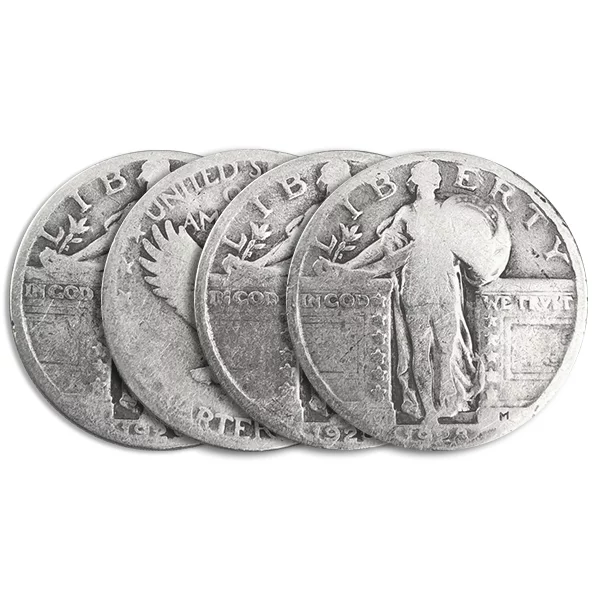
The Standing Liberty quarter dollar was minted from 1916 until 1930. Today, several Standing Liberty quarters are rare and valuable, and the coin’s iconic design makes it a favorite among coin collectors across the country.
Standing Liberty quarters are relatively easy to find in the wild compared to most earlier U.S. quarters. The series is very popular, so virtually all Standing Liberty quarters sell for a premium over melt value due to collectability.
Because of the coin’s popularity, counterfeits of the Standing Liberty quarter are also very common – especially for rare key dates.
| Coin | What to look for | Value |
|---|---|---|
| 1916 Standing Liberty | The series key. First year, only ~52,000 struck; date on the raised pedestal below Liberty. | $2,000 – $25,000 (Auction record: ~$207,400) |
| 1918/7-S Standing Liberty | Overdate. A 7 is visible beneath the 8 in the date; easily mistaken for a plain 1918-S. | $1,500 – $35,000+ (Auction record: $336,000) |
| 1927-S Standing Liberty | Low-mintage semi-key (~396,000); “S” mint mark left of the date. | $50 – $46,000+ (Very grade-dependent) |
Values are highly grade-dependent. Have any suspected key-date Standing Liberty quarter authenticated and graded by PCGS or NGC before buying or selling.
Washington Key Dates & Errors (1932-Present)

The Washington quarter has been minted since 1932 and is the longest-running quarter dollar design in American history.
The most valuable Washington quarters are key dates, or coins from limited mintage years and mints. Some Washington quarters feature rare mint-made errors, and these coins can sell for a considerable amount of money to collectors.
Aside from rare Washington quarters, quarters from this series minted prior to 1965 contain 90% fine silver. Most standard silver Washington quarters are only valued for their silver content, although some carry a small premium due to their collectability.
Because Washington quarters were widely minted, they are the most common quarters worth money that consumers could find in their spare change drawers or casual coin collections. If you’re looking for big money, search for rare key dates or errors in the series. These coins can be very valuable and carry substantial premiums over melt value.
The 1932-D and 1932-S Washington quarters are some of the most commonly counterfeited coins on this page. If you suspect that you’ve found one of these coins, reach out to a coin certification company or your local coin dealer for authentication.
| Coin | What to look for | Value |
|---|---|---|
| 1932-D Washington | First-year key (~436,800 struck); “D” mint mark below the eagle on the reverse. | $150 – $140,000+ |
| 1932-S Washington | First-year key. Lowest 1932 mintage (408,000); “S” mint mark below the eagle | $130 – $30,000+ |
| 1943 Doubled Die Obverse | Doubling visible in “LIBERTY” and “IN GOD WE TRUST”. Findable error. | $50 – $2,500+ (Values can fluctuate) |
Values are highly grade-dependent. Have any suspected key-date Washington quarter authenticated and graded by PCGS or NGC before buying or selling.
Modern State Quarter Errors (1999-2008)
The state quarter series ran for 10 years, from 1999 until 2008. Most of the quarters in the state series are only worth face value ($0.25). The real value is in errors, which are present throughout the series and can catch serious money, depending on the severity of the error and the popularity of the coin in question.
Since modern state quarters were made with no silver, standard coins in the series are usually only worth their face value of 25 cents. But rare errors found throughout the series – most notably the 2004-D Wisconsin Extra Leaf, 2005-P Minnesota Extra Tree, and the 1999-P Delaware “Spitting Horse” – can be very valuable to collectors.
These are also some of the most easy-to-find rare quarters worth money on this list. Despite their popularity among modern error coin collectors, these coins can occasionally be pulled from circulation, making them an excellent place to start if you’re looking for rare and valuable quarter dollars in your household change jar.
| Coin | What to look for | Value |
|---|---|---|
| 2004-D Wisconsin Extra Leaf | An extra corn leaf on the lower-left of the stalk — “High” and “Low” varieties exist | $50 – $1,500+ |
| 2005-P Minnesota Extra Tree | Doubled-die reverse adding a faint extra tree to the right of the state outline | $25 – $300+ |
| 1999-P Delaware “Spitting Horse” | A die crack running from the horse’s mouth, making it look like it’s spitting | $5 – $200+ |
Values are highly grade-dependent. Most examples found in change are worth face value. Only the specific varieties above carry a premium. Consider grading by PCGS or NGC for solid specimens before selling.
Are All Silver Quarters Worth Money?
Until 1965, all quarters minted in the United States were composed of 90% silver. If you’re searching through old change, you can quickly identify these valuable silver quarters by checking their dates.
All silver quarters are worth money, but some are worth more than others. Common pre-1965 silver quarters are worth little more than their melt value in silver, which is currently approximately $10-11 but can vary based on the current spot price of silver.
A silver quarter is typically worth its melt value, which is calculated by multiplying the coin’s weight in troy ounces (approximately 0.1808) by the current spot price of silver. The resulting sum describes how much the silver in a silver quarter is worth, although rarer coins can retail at an added premium over melt value.
Unlike rare quarters, the value of a regular silver quarter is largely dependent on the current spot price of silver. Since silver’s spot price is constantly fluctuating, a silver quarter’s value can change considerably over time.
Since approximately 3.8 billion Washington quarters were minted from 1932 until the removal of silver from coinage in 1965, these coins are relatively easy to find in the wild. The majority of quarters in circulation contain no silver, but coin roll hunters regularly find silver quarters in rolls of coins – and you might even be able to find one of these valuable quarters in your spare change collection.
You can also buy silver quarters online. Silver quarters are commonly known as junk 90% silver due to their silver content, and they often sell for lower premiums than many modern silver bullion coins. This makes silver quarters a popular option for budget stackers who want to cut down on premium costs.
How to Buy or Sell Rare and Silver Quarters
Many investors buy silver quarters because of the savings they offer compared to modern bullion coins and bars. Silver quarters also offer historical value, and some investors appreciate the feeling of buying and collecting circulated silver coins.
Silver quarters can be purchased either online or at a local dealer, and most dealers offer a range of different options for collectors who want to invest in 90% silver quarter dollars. Online dealers like Hero Bullion offer some of the lowest prices for silver quarters, and deals on junk 90% silver can help investors save even more money on circulated silver quarters.
Because of their low premiums and the historical value, buying silver quarters online is a popular way for stackers to add to their silver collections.
Frequently Asked Questions About Rare Quarters Worth Money
What Silver Quarters Are Worth Keeping?
All silver quarters are worth keeping, since every silver quarter is worth at least its melt value. The melt value of a silver quarter varies based on the current spot price of silver, ranging in 2026 from $10-$20.
How Do I Know if My Quarter is Silver?
The easiest way to identify a silver quarter is to look at its date. U.S. quarters dated 1964 or earlier contain 90% pure silver. You can also identify a silver quarter in a roll by looking at the edge. The edge of a silver quarter should be entirely grey/silver, while a non-silver quarter will feature either no silver coloration on the edge or silver coloration only on the top and bottom of the edge.
What is the Rarest Quarter?
The rarest U.S. quarter is the 1796 Draped Bust, which was the first in the Draped Bust series and included only 6,146 pieces. Surviving 1796 Draped Bust quarters are worth tens of thousands of dollars in any grade, and the most well-preserved specimens can fetch hundreds of thousands of dollars at auction.
Are 1965 Quarters Worth Anything?
1965 quarters are usually not worth more than face value, since they are not particularly rare and were minted using no real silver. 1965 quarters with rare errors, such as doubled die specimens, and coins in exceptionally pristine condition can be worth a lot of money.
Final Thoughts: 15 Rare Quarters Worth Real Money
Most modern quarters are only worth their face value of $0.25, but rare quarters, silver quarters, and modern errors can be worth quite a bit more. If you’re checking your spare change drawer for rare quarters worth money, look for pre-1965 quarters made with real silver, unique errors, and key dates that were minted in limited numbers.
You might also be interested in:


About The Author

Michael Roets
With over six years of experience reporting on precious metals, Michael Roets covers market news, buying guides, and commentary for Hero Bullion.