
Here’s Why Each President Made it Onto His Coin

At a Glance:
-
- The first president to appear on a U.S. coin was Lincoln on the cent in 1909.
- Today, presidents appear on the cent, nickel, dime, quarter, and half dollar.
- Presidents appear on U.S. coins for a variety of different reasons.
- On this page, learn why each U.S. president appears on his coin.
Here’s Why Each President Made It Onto His Coin
In the 21st century, it may be hard to imagine not seeing former American presidents on U.S. coins. This wasn’t the case for much of American history, though. The first American president to appear on a U.S. coin was Abraham Lincoln, whose portrait was introduced to the one-cent coin in 1909.
Since the introduction of the Lincoln cent, American presidents have become a fixture of United States coinage. The U.S. cent, nickel, dime, quarter, and half dollar all feature former American presidents. Abraham Lincoln appears on the penny, Thomas Jefferson decorates the nickel, Franklin D. Roosevelt is featured on the dime, George Washington’s image is found on the quarter, and the modern half dollar features John F. Kennedy.
But why did these presidents appear on our coins? The majority of U.S. presidents appear on no pieces of currency, and some appear on both coins and notes. U.S. presidents appear on modern coins for a variety of different reasons.
On this page, learn more about why each president is featured on the coin that depicts him.
Presidents on Coinage: A Controversial History
The decision to begin including presidential portraits on coinage was a controversial one. While featuring monarchs on currency is a tradition dating back thousands of years to some of humanity’s oldest civilizations, anti-royalist sentiment in the United States caused designers to intentionally avoid depicting the country’s leaders on its coins.
Under the Coinage Act of 1792, U.S. silver and gold coin designs were required to include two main things:
- An image emblematic of liberty on the obverse
- A depiction of a bald eagle on the reverse
Before Lincoln appeared on the U.S. cent in 1909, American coins typically featured a version of Lady Liberty on the obverse and a design of a bald eagle on the reverse. Nickels and pennies were not subject to this regulation, since these coins were never minted with gold or silver.
Abraham Lincoln on the Penny
Abraham first appeared on the penny in 1909, when he replaced the Indian Head Penny. Lincoln’s appearance on the cent was the first time an American president was featured on a U.S. coin. While the concept of placing presidential portraits on coinage was considered taboo in the early days of the American republic, Lincoln’s design itself was warmly received after its release.
Lincoln has appeared on the obverse of the U.S. cent since 1909. The reverse of the original coin, commonly called the wheat penny, featured two pieces of wheat surrounding the coin’s denomination and issuing country. The wheat cent was replaced in 1959, and modern Lincoln cents include a reverse depiction of the Lincoln Memorial.

When and Why Did Lincoln Appear on the Penny?
Lincoln first appeared on the cent in 1909, 100 years after his birth date. In 1909, the United States was just decades separated from the Civil War, and Lincoln’s leadership in restoring the Union helped cement his legacy as one of the most important U.S. presidents. As a result, Lincoln was honored by being the first U.S. president to appear on a coin.
Thomas Jefferson on the Nickel
Thomas Jefferson first appeared on the U.S. nickel in 1938, replacing the iconic Buffalo nickel. Jefferson’s portrait on the obverse is accompanied by a depiction of Monticello, Jefferson’s lifelong home and plantation, on the reverse side. Since 1938, Jefferson’s image has appeared on every United States nickel.
When and Why did Jefferson Appear on the Nickel?
Unlike Lincoln, Jefferson’s appearance on his coin did not coincide with an anniversary. Jefferson appears on the U.S. five-cent coin in order to honor his legacy as an American leader, as well as his home’s contributions to classic American architecture.
Here’s Why Jefferson Replaced the Buffalo Nickel
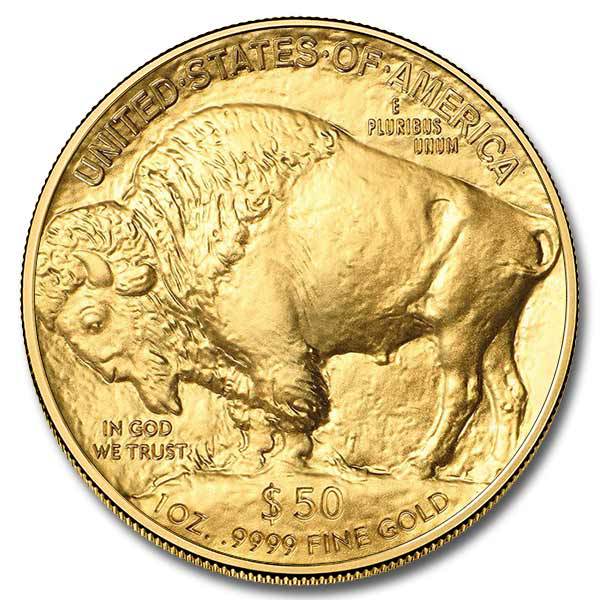
The decision to include Jefferson on nickels beginning in 1938 had less to do with Jefferson himself than with the U.S. Treasury’s dissatisfaction with the Buffalo nickel. Although the Jefferson nickel is popular today and was moderately well-received during its minting run, mint officials disliked the coin because of the difficulty of minting it and its tendency to easily wear over time with circulation.
Under U.S. law at the time, coins needed to circulate for 25 years before their designs could be changed without Congressional approval. When the Buffalo nickel hit its 25-year mark in 1938, mint officials took the opportunity to replace it with a new design commemorating Thomas Jefferson.
Franklin D. Roosevelt on the Dime
Franklin Delano Roosevelt has appeared on the U.S. dime since 1946, after the Mercury dime was discontinued in 1945. His appearance on the ten-cent coin is among the most intentional, since both FDR’s legacy and the name of the coin played a role in the mint’s decision to commemorate him on its obverse side.
Here’s Why Roosevelt Appears on U.S. Dimes
As one of the most consistently popular U.S. presidents and the only American president to have served three terms, it should come as no surprise that Franklin D. Roosevelt is commemorated on U.S. coinage. However, the decision to include Roosevelt on the silver dime specifically was a deliberate one.
Franklin D. Roosevelt was chosen to replace the Mercury dime design in 1946 in order to celebrate both his legacy and his contributions in founding the March of Dimes, a charitable organization established to combat polio.
About Roosevelt’s “March of Dimes”
Roosevelt founded the “March of Dimes” in 1938. Originally named the National Foundation for Infantile Paralysis, the “March of Dimes” nickname was based on a pun coined by actor Eddie Cantor. Cantor’s pun sparked a nationwide fundraising campaign revolving around the ten-cent U.S. coin.
The foundation’s name was officially changed to the March of Dimes decades later in 2007. When Roosevelt died in 1945, mint officials decided to add his likeness to a coin. Because of FDR’s involvement with the March of Dimes, the U.S. dime was redesigned in 1946, one year after his death.

George Washington on the Quarter
George Washington first appeared on the U.S. quarter in 1932 to commemorate the 200th anniversary of the founding father and first president’s birth date. Originally, mint officials planned for the Washington silver quarter to be a one-year-only commemorative. Due to the coin’s immediate popularity, it returned and became a permanent design for U.S. quarters.
Why and When Washington Made It Onto the Quarter
Believe it or not, the Washington quarter wasn’t the first time the United States considered placing George Washington on a coin. During Washington’s presidency, Congress deliberated designs for newly minted U.S. coins. Washington argued against including U.S. leaders on the faces of American coins since he believed they would look like European coins featuring monarchs.
Washington finally made it onto a United States coin in 1932, when the Standing Liberty quarter was redesigned to celebrate Washington’s legacy on the 200th anniversary of his birth date. The reverse of the Washington quarter features the heraldic eagle of the United States.

Quarter Controversy: Here’s How Washington’s Design Was Selected
The U.S. Mint held a competition to determine the designs for the U.S. quarter after deciding that they would commemorate George Washington. As was typical for the time, the Commission of Fine Arts was tasked with choosing a design to recommend to Treasury Secretary Andrew W. Mellon.
The CFA recommended a design by Laura Gardin Fraser, sculptor and wife of James Earle Fraser, the artist behind the Buffalo nickel. Secretary Mellon rejected this choice, however, instead opting to move forward with the design penned by John Flanagan.
This decision led to considerable public controversy. Many observers felt that Fraser’s design was stronger than Flanagan’s, leading to accusations that sexism motivated the Treasury to reject Fraser’s artwork. The controversy did little to dissuade the Treasury Secretary, and the U.S. Mint began minting quarters with Flanagan’s design in 1932.
Fraser’s artwork eventually made it onto U.S. coinage, though. Modern quarters have depicted Fraser’s depiction of George Washington since 2022, when it was introduced as part of the U.S. Mint’s Women Quarters Program.
John F. Kennedy on the Half Dollar
John F. Kennedy’s portrait is featured on the obverse of the U.S. half dollar. Kennedy first appeared on the half dollar in 1964, replacing Benjamin Franklin on the coin’s obverse. The reverse of the Kennedy half dollar depicts the Presidential Seal of the United States.
John F. Kennedy was added to the newly redesigned half dollar in 1964 after his 1963 assassination. The coin’s redesign was intended to serve as a national remembrance for the president, who was assassinated by Lee Harvey Oswald. Kennedy has remained the face of the half dollar since 1964.

Final Thoughts: Here’s How Each President Got His Coin
While most circulating U.S. coins today feature obverse depictions of former U.S. presidents, this hasn’t always been a standard of the U.S. Mint. The first president to be depicted on a U.S. coin was Abraham Lincoln, who has appeared on the one-cent coin since 1909.
U.S. presidents appear on the penny, nickel, dime, quarter, and half dollar, and each president was chosen for a different reason.
Lincoln replaced the Indian Head penny in 1909 to commemorate the 100-year anniversary of his birth. Jefferson appeared on the nickel in 1938 to replace the Buffalo nickel, which had become unpopular with mint officials. Franklin D. Roosevelt became the face of the dime in 1946 as a reference to his role in founding the March of Dimes, a charity that worked to eliminate polio. The George Washington quarter commemorated the 200th anniversary of the national founder’s birth, and the half dollar features John F. Kennedy as a reminder of the assassinated president’s legacy.
You might also be interested in:


About The Author

Michael Roets
With over six years of experience reporting on precious metals, Michael Roets covers market news, buying guides, and commentary for Hero Bullion.