
The Banned Gold Coin – History of the Gold Krugerrand

At a Glance:
-
- The Gold Krugerrand is widely considered the first ever investment-grade gold bullion coin.
- It also became the first banned gold coin in the world after an embargo by the United States.
- Explore the history and impact of the first banned gold coin in history on this page.
The Banned Gold Coin – History of the Gold Krugerrand
From the late 1960s to the early 80s, one coin was responsible for a whopping 90 percent of global gold coin sales. This coin was the South African Gold Krugerrand, which historians call the first modern gold bullion coin.
But its stranglehold on the gold market didn’t last forever. By 1985, the U.S. government had banned its import entirely, causing sales to plummet. To this day, the coin hasn’t quite recovered to its unprecedented 20th century heights.
The story of the Krugerrand is one of the most fascinating in coinage. In a way, this cautionary tale gives investors yet another example of how gold coins have the capacity to represent much more than just an investment. In the case of the Krugerrand, the coin became the target of global outrage concerning Apartheid, a racist system of discrimination that operated in South Africa until the early 90s.
Every investor should know about the complex and controversial history of the South African Gold Krugerrand — the banned coin.
Despite its popularity, the South African Gold Krugerrand was the subject of embargo in the United States starting in 1985. In order to protest the racist Apartheid system in South Africa, America’s lawmakers banned the import of the coin — leading to a wide range of consequences.
The World’s First Gold Bullion Coin
Most historians agree that South Africa’s national gold coin was the pioneer of a new type of gold coin. Gold coins had been used by governments as currency for thousands of years. But when the Krugerrand premiered, it was billed as a new type of investment. Investors who put their money into Krugerrands weren’t buying from a bank or private mint. Instead, they were scoring genuine gold bullion backed by a sovereign government.
The popularity of the Gold Krugerrand is hard to understand unless we put it into modern terms. Like we explained before, the Krugerrand monopolized the gold coin trade at its introduction, peaking at 90% of the total market.
Today, the global gold coin market is estimated at around 12 billion dollars annually. If the coin enjoyed that level of dominance today, its global sales would total around 10.8 billion dollars annually. Clearly, this would dwarf sales for any other gold coin on the market. The Gold Krugerrand did what any other revolutionary product does; it filled a market that other distributors didn’t even know existed.
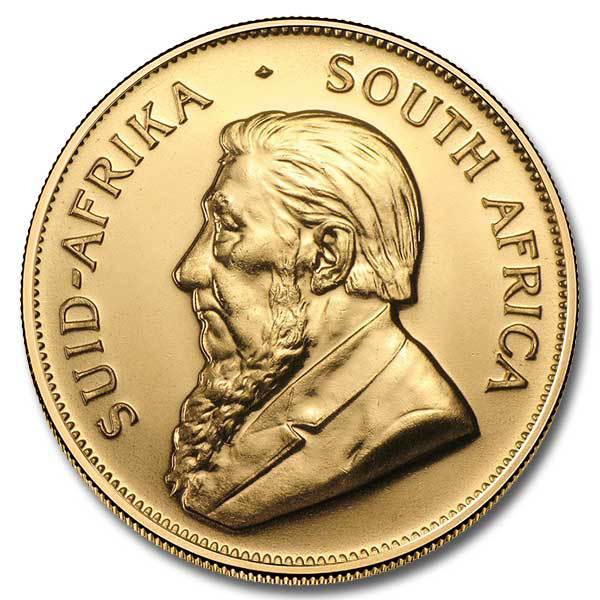
South Africa enjoyed dominance in the gold coin markets for nearly twenty years. But the Krugerrand was destined for a fall from grace, a collapse precipitated by a complex, dark power structure that would soon become the subject of international controversy.
Why Was the Gold Krugerrand Banned?
The Krugerrand was not banned entirely, but it was embargoed by the United States. Under President Ronald Reagan, Congress banned the import of Gold Krugerrand Coins in order to show their disapproval of a racist system in South Africa known as Apartheid.
Sanctions prohibiting the import of Krugerrands continued until 1991, one year after South Africa began dismantling its controversial Apartheid political infrastructure. The banning of the Krugerrand is one of the most shocking stories in the history of precious metals. The Krugerrand was both the first investment-grade gold bullion coin and the first coin to be sanctioned by the international community.
Apartheid and the Gold Krugerrand Embargo
The story of the world’s first banned gold coin starts not with bullion – but with politics. Specifically, South Africa’s racist Apartheid system provided justification for radical sanctions from other governments – including the U.S. import bans on Gold Krugerrands.
Starting in 1948, South Africa’s government instituted a system of racial segregation commonly known as Apartheid. Under Apartheid, Black South Africans were banned from certain establishments, prohibited from marrying outside their race, and more. Of course, the system was a complex structure of racial segregation that we couldn’t possibly do justice in such a short post.

The horrors of Apartheid became the subject of international debate starting in the early 1960s. As famed South African humanitarian Nelson Mandela began to organize Black South Africans against the racist system, governments around the world began to take notice. Apartheid continued as government policy until its abolition in 1990.
But the controversy surrounding Apartheid had an unprecedented consequence.
Embargo and Krugerrand Sales
This brings us back to the Krugerrand. As we approached the mid-1980s, sales for the Gold Krugerrand began to stagnate. The coin was still a massive hit among gold stackers, but competition from other gold coins had eaten into the monopoly it previously enjoyed. Additionally, even the most apolitical coin collectors globally began to criticize the state behind the Krugerrand, further tanking sales.
In 1985, the United States officially banned the import of Gold Krugerrands from South Africa. The initiative was spearheaded by the Reagan administration and was part of a small set of sanctions meant to coerce the South African government into ending Apartheid. A much larger set of sanctions would pass through Congress the following year, and these regulations would strike one of the most significant killing-blows on South Africa’s Apartheid segregation.
But the 1985 regulations were limited in nature and mostly functioned to set the groundwork for a larger set of sanctions on South Africa.
The global market for Gold Krugerrands was changed overnight. For investors within the United States, the controversy of the Krugerrand was just beginning.
In protest of South Africa’s Apartheid system, the United States banned imports of the Gold Krugerrand in 1985.
After the Ban – Timeline of Gold Krugerrand Embargo
Unsurprisingly for students of the market, the Reagan Administration’s ban on Krugerrand imports had an unintended consequence. Rather than destroy global demand for the Gold Krugerrand, the embargo caused investors to buy the coins up in a panic. Many gold stackers feared that Krugerrands would soon become illegal to own. Others took advantage of this concern to buy up as many of the coins as they could before the market wised up.
The result was a renewed public interest in the South African Gold Krugerrand. Inside the U.S., trade of the coin reached a brief peak in the months following Reagan’s sanctions on the import of Krugerrands.

Reagan’s gambit may not have destroyed the secondary market for Krugerrands, but it did have the intended effect on the South African government. According to one news source from 1985, Krugerrands accounted for nearly half of all foreign exchange earnings logged by South Africa.
Sanctions on the import of South African Gold Krugerrands ended in 1991, just one year after the South African government officially abolished their controversial and racist Apartheid system.
The embargo on Krugerrands helped pressure the South African government into reevaluating their racist Apartheid system, but it also created a rich secondary market of panicked buyers and sellers within the United States.
Is the Gold Krugerrand Still Illegal?
Gold Krugerrands are no longer illegal. Truthfully, the coins were never genuinely illegal to own. Instead, the “illegal coin” was the subject of an embargo from the United States. This embargo was removed alongside other sanctions once the South African government began dismantling its Apartheid system in 1991.
Today, the Krugerrand remains one of the world’s most popular gold coins. The coin’s high durability and beautiful designs make it a culturally significant collectible. Still, the Gold Krugerrand isn’t quite the powerhouse that it once was.
Gold Krugerrand – A Trend Setting Coin
Perhaps the biggest impact of the Krugerrand embargo had nothing to do with the coin itself. After the Krugerrand import ban in the United States, other countries scrambled to fill the gap in market demand the embargo left behind. Coins like the American Gold Eagle, British Gold Britannia, and the were released in the few years that followed.
In a sense, the Krugerrand stepped down as the world’s dominant popular coin – but gave stackers several new coins in return. We have the Gold Krugerrand – and Ronald Reagan’s Krugerrand embargo – to thank for the plethora of beautiful gold coins we now enjoy.
Don’t believe it? The Gold Krugerrand was banned for import by the United States in 1985. Here’s a list of popular gold coins and the years when they were first released:
| Sovereign Gold Coin | Year of First Release |
|---|---|
| American Gold Eagle | 1985 |
| British Gold Britannia | 1987 |
| Australian Gold Kangaroo | 1987 |
| Austrian Gold Philharmonic | 1989 |
Final Thoughts: The Banned Gold Coin
It’s unlikely we’ll ever see another gold coin rise to the heights of popularity enjoyed by the South African Gold Krugerrand during its decades of dominance in the 1960s and 1970s. Competition from other modern government bullion coins like the Gold Eagle, Maple, and Britannia has provided investors with myriad beautiful gold coins to choose from.
But the Krugerrand holds a special place in our hearts. To this day, it remains one of the most controversial gold coins — and it offers investors one of the craziest stories in all of the gold industry!


About The Author

Michael Roets
With over six years of experience reporting on precious metals, Michael Roets covers market news, buying guides, and commentary for Hero Bullion.