
Silverites, Bimetallism, and the American Movement For Free Silver

At a Glance:
-
- The free silver movement was a political philosophy that existed in the late 1900s.
- Free silver supporters argued that silver and gold should be used to back the U.S. Dollar.
- This system, called bimetallism, was popular among silver supporters known as silverites.
Silverites, Bimetallism, and the American Movement For Free Silver
In the late 19th century, the “free silver” movement dominated Democratic politics. As the country suffered several economic depressions, the question of which precious metal should back our currency took center-stage. More than just a fringe faction, the free silver movement came to represent a much larger economic debate which continues even today.
What is free silver? Throughout a period of around twenty years, free silver advocates fought for a monetary system known as bimetallism. Dubbed “silverites,” members of the free silver movement argued that both silver and gold should be exchangeable for United States currency.
On this page, learn more about the free silver movement, the circumstances that helped popularize it, and the eventual collapse of bimetallism in the United States.
The Free Silver Movement
In the 21st century, precious metal policies play only a small role in electoral politics. In the late 19th century, however, Americans were very concerned with the metals that backed our money. By 1873, the U.S. government had stopped exchanging silver coins for silver bullion, a controversial move.
What caused the free silver movement? The free silver movement arose as a direct reaction to the “Crime of 1873.” The Crime of 1873 is a disparaging term used by silver investors to describe the Coinage Act of 1873. Under this law, the U.S. government was no longer required to turn privately owned silver bullion into denominational silver coins.
Silver prices crashed after the Crime of 1873, since millions of Americans suddenly owned silver that could not be converted into usable currency. This price crash, coupled with a major recession called the “Panic of 1873,” led to the rise of a group of politicians known as silverites.
What is a Silverite?
What is a silverite? The silverites were a loosely organized political group who argued for a bimetallic monetary system where both gold and silver would be used to back the United States Dollar. The silverite cause became popular after the Crime of 1873 made gold the de facto monetary standard by ending the free silver system.
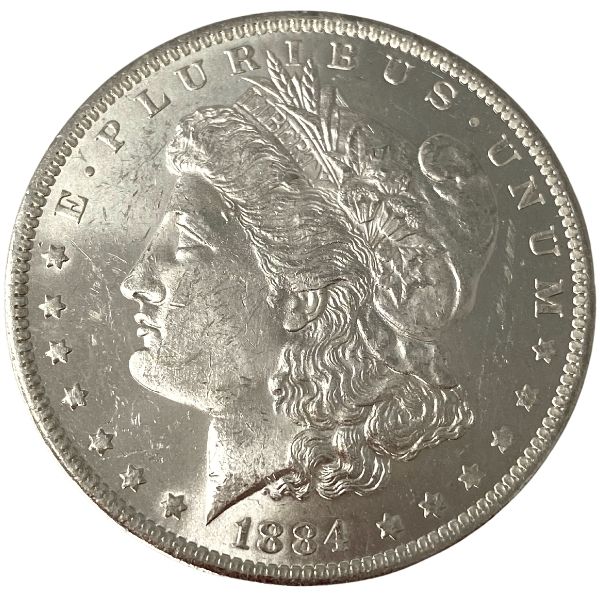
Silverites held varying positions on the place silver should have occupied in the American currency system. Most silverites believed that a bimetallic system would be best, but a few popular silverites argued for a system backed entirely by silver bullion.
The silverite movement largely dissipated at the turn of the 20th century after gold became the official U.S. monetary standard under the Gold Standard Act of 1900.
Gold, Silver, or Both? | Understanding the Bimetallism Movement
What is bimetallism? Bimetallism refers to a system in which both gold and silver are used to back a fiat currency. Because of the low supply and high cost of gold, the United States established a bimetallic system when the United States Mint was formed in 1792. Under bimetallism, Americans were able to turn gold and silver into the government in exchange for gold and silver coins that could be used as actual currency.
The bimetallic system persisted in the United States for about ninety years until the passage of the Coinage Act in 1873. This highly controversial move prohibited citizens from exchanging their silver for silver currency coins. In a sense, the Coinage Act of 1873 left American silver investors “holding the bag,” since their bullion could no longer be converted into usable currency.
After the Coinage Act of 1873, citizens and politicians began to call for a return to a bimetallic monetary system. Because the law coincided with the start of a major economic depression, many people blamed the Coinage Act of 1873 for the country’s financial misfortune. In other words, bimetallism became a rallying cry for average people who wanted to revert back to a monetary system they felt had worked well.
Timeline of Events | Bimetallism in the United States
Modern history books often overlook how vital precious metals were to electoral politics in the late 1800s. The free silver movement wasn’t just a fringe position. Instead, the silverite cause came to represent a much larger pivot to populism in the United States, a realignment which still impacts the American political system today.
Starting with the Crime of 1873 and ending with the Gold Standard Act of 1900, nearly three decades of bitter arguments between silver and gold supporters helped to shape this country’s modern monetary system.
The “Crime of 1873” – Free Silver System Ends
The Crime of 1873 is the event which kickstarted the free silver movement. Until this law’s passage, the United States operated under a system called “free silver.” In the free silver model, citizens were allowed to turn their silver over to the government and receive, in exchange, usable silver coins.
Why was the Coinage Act of 1873 passed? By the late 1860s, the U.S. government realized that silver prices were falling and might go even lower, given the discovery of new silver mines. Because the free silver system pegged the value of the United States Dollar to the value of silver, U.S. leaders sought to transition to the economy into the more stable gold standard.
The Coinage Act of 1873 caused silver prices to fall even further, since so many Americans after the law’s passage had large caches of silver that would no longer be converted into usable money. The public outcry following the Coinage Act of 1873 was severe, with the media dubbing it “The Crime of 1873.”
Economic Depressions in the 1870s-1890s
Right after the Coinage Act of 1873 became law, the United States entered an economic depression known as the “Panic of 1873.” In September of 1873, U.S. bank Jay Cooke & Company failed, creating a cascading effect across the United States economy. In the insurance industry, several companies declared bankruptcy, further worsening economic conditions in the U.S.
The Panic of 1873 helped lay the groundwork for what would eventually become the free silver movement spearheaded by the silverites. Many average Americans possessed far more silver than gold, and they were left without usable currency after the Crime of ’73 made it impossible for them to exchange their precious metals for useful currency.

Silver as a Class Warfare Catalyst
Silver was considered by many Americans to be the average man’s metal. Like today, silver was far cheaper than gold in the 19th century. While banks and wealthy robber-barons held large stacks of gold coins and bars, most working Americans instead used silver coins to store their wealth.
Because average people preferred silver to gold, the government’s decision to eliminate the free silver system in 1873 felt like a direct assault on the working-class. In this sense, the blossoming movement for bimetallism became the poster child for a growing class war during the economic depression of the 1870s. Silverites often highlighted this fact in their speeches, decrying the gold standard as an unjust system that favored the rich robber-barons over the working-class.
Free Silver Politics in the 1890s
In the 1880s and 1890s, Americans continued to demand a return to a bimetallic monetary system. Major economic depressions worsened the economic inequity that separated rich businessmen from middle class laborers during the Gilded Age. Since these laborers were more likely to own silver than gold, the move to introduce a de facto gold standard enraged many average Americans.
Populist politicians began to argue against the gold standard and for the United States to once again adopt a system where silver could be converted into usable silver dollars. As economic conditions worsened, public approval for bimetallism increased. Across the country, the free silver movement gained steam – and support.
While free silver was a relatively popular proposal among middle-class Americans, silverites were unable to secure enough power in government to reject the gold standard and reintroduced a bimetallic policy.
The 1896 “Cross of Gold” Speech and Silver Populism
In 1896, the free silver movement became a truly mainstream position after a fiery speech from a young Democrat named William Jennings Bryan.
The speech, called the “Cross of Gold,” was delivered at the 1896 Democratic National Convention (DNC). William Jennings Bryan was a young and inexperienced policymaker but a gifted public speaker. He entered the convention as a dark horse candidate with little chance of winning the Democratic presidential nomination.
Prior to the convention, Bryan had privately written to delegates, urging them to consider supporting free silver and a bimetallic system as part of the party’s political platform. In doing so, he set the stage for his speech on the dangers of the gold standard.
William Jennings Bryan delivered his passionate Cross of Gold speech, decrying the gold standard as a tool used to make the rich richer at the expense of the common man. He concluded with his most famous line:
You shall not crucify mankind upon a cross of gold.
By the end of his speech, the delegates at the DNC were so impressed that they carried Bryan around the venue on their shoulders.
The Nebraska Congressman won the party’s nomination the next day before going on to lose in the general election to incumbent William McKinley.
The Gold Standard Act and the End of Free Silver Politics
When did the free silver movement end? Although supporters continued to advocate for bimetallism well into the early 1900s, the free silver movement collapsed in 1900 after the passage of the Gold Standard Act. Signed into law by President William McKinley in 1900, the Gold Standard Act officially established gold as the sole precious metal used to back the United States currency.
William Jennings Bryan ran for President on the Democratic ticket several more times but was never able to secure the office for the silverites. Over time, the gold standard was accepted as law, and the populist free silver movement began to fade from public view.
Final Thoughts: The Free Silver Movement Today
In 1934, just over three decades after McKinley established the gold standard, President Franklin D. Roosevelt abandoned the link between the United States Dollar and gold bullion. The system wouldn’t be officially abandoned until Richard Nixon ended the gold standard in 1971.
Today, the free silver movement is not a significant position in American politics. The United States monetary system is no longer linked to gold or silver, and it is unlikely that the U.S. will ever return to a bimetallic system. The gold standard occasionally makes its way into major political party platforms, and a significant percentage of Americans support readopting the gold standard for our currency.
The free silver movement does not exist in the 21st century, but its impacts are still felt in American politics. The silverites of the late 1890s helped jumpstart a national pivot toward populism and their tendency to highlight economic inequity and class warfare remains an important feature of electoral politics today.
You might also be interested in:


About The Author

Michael Roets
With over six years of experience reporting on precious metals, Michael Roets covers market news, buying guides, and commentary for Hero Bullion.