
What’s Really In Fort Knox?

At a Glance:
-
- The United States Bullion Depository is more commonly known as Fort Knox.
- This facility reportedly houses the United States’ gold reserves, along with other artifacts.
- Some government officials have called for an audit of the gold depository.
- On this page, learn more about the gold inside Fort Knox – and the conspiracy theories it inspired.
What’s Really In Fort Knox? | Tracing the Origins of Gold Standard Skepticism
At the suggestion of Rand Paul (R-KY), the Department of Government Efficiency (DOGE) is considering an audit of Fort Knox. The United States Bullion Depository, commonly called Fort Knox, is a fortified depository responsible for storing the gold bullion reserves of the United States of America. Aside from the gold, Fort Knox also contains a wide range of artifacts relevant to U.S. wealth, coinage, and history. In particular, Fort Knox reportedly holds several rare 1933 Saint-Gaudens Double Eagle Gold Coins, the 1974-D aluminum cent, and more.
Because visitors are prohibited from entering Fort Knox, the facility has become a fixture of American culture and imagination. Today, some Americans believe that the official estimates of how much gold is in Fort Knox are false and that the facility actually contains little or no actual gold. The lack of transparency concerning Fort Knox has given rise to a number of conspiracy theories, so it’s unsurprising that Americans are once again wondering what’s really in Fort Knox.
On this page, learn more about Fort Knox, its history, and what we know about the famous vault’s actual (and likely) contents.
Here’s What’s Probably In Fort Knox
Elon Musk, the billionaire head of the newly established Department of Government Efficiency (DOGE), suggested in February 2025 that he may consider auditing Fort Knox. Fort Knox is a notoriously secure facility that holds the gold reserves of the United States. Although it is rare for agencies other than the Treasury to audit Fort Knox, the suggestion is not particularly new.
For nearly half a century, some Americans have expressed concerns that the gold inside Fort Knox may be either missing or far lower in quantity than the U.S. Mint claims. There is little reason to suspect that this is the case. According to the U.S. Mint, gold is only removed in “very small quantities” during “regularly scheduled audits” to test for purity, and the gold holdings of the United States at Fort Knox have remained unchanged “for many years.”
So what’s in Fort Knox as of February 2025? According to the United States Mint, Fort Knox contains 147.3 million ounces of gold, which includes around 50% of the Treasury’s total gold holdings. Most of the gold at Fort Knox is held in standard gold bars weighing 400 ounces and measuring 7 x 3 and .625 x 1.75 inches.
How Often is Fort Knox Audited?
Some government officials and news outlets claim that Fort Knox hasn’t been audited since 1974, but this isn’t exactly true. Fort Knox’s last show audit, an audit in which outside officials actually show the public what’s inside of Fort Knox, was in 1974. However, the United States Treasury Department claims to audit Fort Knox internally once per year. These audits are not public, and outside visitors are not allowed inside of Fort Knox.
When Elon Musk and the Department of Government Efficiency (DOGE) talk about auditing Fort Knox to examine America’s gold reserves, they’re generally referring to an external audit conducted by outside parties unaffiliated with the U.S. Treasury. Mr. Musk signaled that he might live stream his personal audit of Fort Knox, which would be a historical first for the facility.
Fort Knox and Security
Because of the vast amount of wealth at Fort Knox, as well as the facility’s importance to America’s economic and national security, it has some of the most sophisticated security features of any such facility on the planet. Only authorized personnel are allowed into the depository, and no single person knows the entire process required to enter the vault, according to U.S. Mint officials.
Gold Reserves In Fort Knox
Fort Knox was initially established in 1935 in order to deposit an influx of gold that was being stored in New York and Philadelphia. By 1941, Fort Knox hit what would become its highest quantity of gold holdings in history – 649.6 million ounces of the valuable metal!
The way the U.S. Treasury tracks the value of gold holdings at Fort Knox may seem strange. Technically, gold holding values are calculated by multiplying the total number of ounces by gold’s “book value” of $42.22 per ounce, according to the United States Mint. Given gold’s current spot price of over $2,900 per troy ounce, Fort Knox reportedly contains well over $400 billion in gold bullion.
According to some reports, gold isn’t the only thing hiding within the walls of America’s securest vault.
What Else Is In Fort Knox?
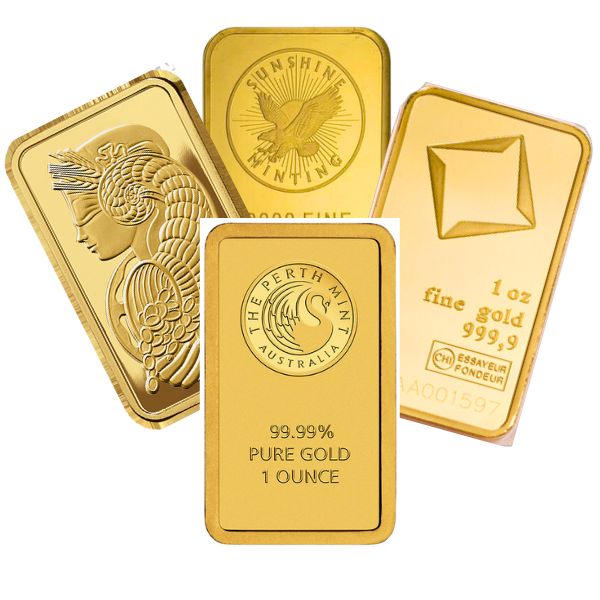
Aside from gold, Fort Knox has sometimes been home to some of America’s most important cultural and historical artifacts. The U.S. government transferred key historical documents, including the Declaration of Independence and the Constitution, to Fort Knox during World War II in order to protect them. Certain valuable U.S. coins, including the illegal-to-own 1933 Saint-Gaudens Double Eagle gold coin, are also rumored to be among Fort Knox’s treasures.
Because of the facility’s high security and the lack of external auditing, Fort Knox has long been the subject of conspiracy theories, both about its contents and its potential lack of contents.
Outside Audits of Fort Knox
Who has audited Fort Knox? For most of the history of Fort Knox, only Treasury Department personnel have been allowed to examine the facility’s contents. Even Treasury Department officials are limited in their capacity to closely examine specific vault contents, given the security of the vault and its importance to national security. Fort Knox has only been examined by officials outside of the U.S. Treasury Department three times.
In 1943, President Franklin D. Roosevelt became the first official outside of the Treasury Department to examine Fort Knox. Another external guest audit didn’t occur until 1974, when government officials publicly toured the facility at Fort Knox in order to dispel conspiracy theories that the facility had been emptied of its gold by coastal elites.
The most recent outside examination of Fort Knox happened in 2017. That August, Republican Senator Mitch McConnell and several staff members examined the facility.
Outside of these three instances, audits of Fort Knox have been strictly limited to Treasury Department officials. Additionally, it is worth noting that, in all of these cases, tours did not involve a close audit or weighing of Fort Knox’s gold.
Is the Gold in Fort Knox Missing?
Like we mentioned earlier, the high security and minimal government transparency surrounding Fort Knox has become a breeding ground for conspiracy theories. These theories that the gold may be missing from Fort Knox are nothing new. During the 1970s, a popular conspiracy alleging that coastal elites had plundered Fort Knox for its gold became such a public issue that U.S. Congressmen were given a rare look inside the vault to calm citizen concerns.
Is it possible that the U.S. Mint is overstating the quantity of gold at Fort Knox? It’s not impossible that the U.S. Mint’s estimates are incorrect, but it is unlikely. The Treasury Department audits the gold in Fort Knox annually, and no gold has been added to or removed from Fort Knox in many years. For all intents and purposes, Fort Knox is an unchanging vault filled with nearly half of the U.S. Treasury’s gold holdings.
In all likelihood, the U.S. Treasury’s estimate of its gold holdings at Fort Knox are probably accurate. But hey – an occasional audit never hurt anybody!
What If Fort Knox is Empty?
Economists don’t exactly know what would happen if it turned out that the gold inside of Fort Knox is really missing. On one hand, such a revelation would technically amount to a loss of nearly half a trillion dollars for the United States – that’s around 1/56th of America’s total GDP. Congress would be forced to investigate where the gold went, and experts say that this kind of loss could have a substantial impact on consumer confidence in our economy.
However, it’s unclear what would happen to the free-floating United States dollar if Fort Knox turned out to be empty. While in decades past the revelation that the U.S. lost or spent half a trillion dollars in gold would have wrecked the value of our currency, the United States left the gold standard decades ago. Most of the impact of a failed audit of Fort Knox on the United States dollar would likely come as a result of a decline in U.S. soft power and consumer confidence.
Final Thoughts: Musk May Audit Fort Knox, But What Will He Find?
Fort Knox, a symbol of security and wealth, has once again dominated headlines this month as Republicans consider what some Americans say would be a long-overdue outside audit of America’s gold reserves. Only three such audits have occurred in the history of Fort Knox, and all three were modest in scale and included no official weighing of the facility’s gold content.
According to the available evidence, Fort Knox likely contains over 147 million ounces of gold bullion, as well as several valuable artifacts from America’s storied history. However, the security of Fort Knox and a lack of transparency from the Treasury means that we don’t know exactly what hides within its impenetrable walls.
You might also be interested in:


About The Author

Michael Roets
With over six years of experience reporting on precious metals, Michael Roets covers market news, buying guides, and commentary for Hero Bullion.