
What Does Mintage Mean?

At a Glance:
-
- Mintage refers to the number of a coin minted at a given mint and year.
- Coins with low mintages tend to be rarer and more valuable than high-mintage coins.
- Understanding mintages can help you build your coin collection more efficiently.
- On this page, learn about what mintages mean for coins.
What Does Mintage Mean?
Like other collectibles, a coin’s rarity hinges on how rare it is. One way to check the rarity of a coin is to determine its mintage. The mintage of a coin refers to how many of the coin were produced during a given year and from a given mint. Coins with lower mintages are often rarer than coins with higher mintages, and U.S. coins with extremely limited mintages are sometimes called key dates.
Mintages are published for most circulated U.S. coins, many bullion coins, and some privately minted silver rounds and bars. For coin collectors, knowing mintage figures for popular coins is especially important. Since limited mintage and key date coins carry larger premiums than common coins, understanding the key dates in a given series can potentially save collectors thousands of dollars.
On this page, learn more about what mintage means on coins, how to identify mintage figures for certain coins, and more.
Understanding Mintage Figures
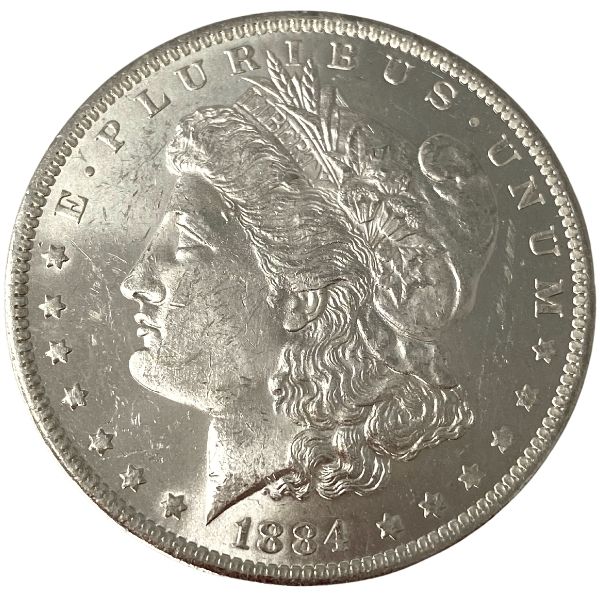
Coin mintages, also known as mintage figures, describe how many specimens of a coin were produced in a given year at a given mint. Among U.S. coins, mintage numbers during a given year can vary considerably between mints. A good example of this phenomenon is the Carson City Morgan Dollar. CC Morgan dollars are considered rare and valuable because of how few Morgan dollars were minted in Carson City compared to other mints. In other words, the limited mintage of the Carson City series is what makes CC Morgan dollars so valuable.
“Mintage” is also used to describe the number of specimens minted for bullion coins, bars, and rounds. Privately minted bars and rounds seldom feature mint marks, so mintages for these coins are not typically split among multiple mint locations. Mintage figures for bullion coins like the American Silver Eagle are similarly totaled, rather than being split across multiple mints, since regular strike Silver Eagles do not feature mint marks.
Finding a Coin’s Mintage
Unlike its mint mark, a coin’s mintage cannot be found on its surfaces. To find the mintage of a silver coin, investors should look for mintage figures on either the mint’s website or a third-party source. Grading companies like PCGS and NGC track mintage figures for circulating U.S. and some bullion coins, making these websites great resources for finding the mintage of your rare coins.
When it comes to finding the mintage of your coin on its mint’s website, your mileage may vary. Some mints, such as the U.S. Mint, consistently publish mintage figures for all of their bullion and circulating coins. Other mints are not so consistent and may only publish mintage numbers occasionally for certain coins.
Collector forums can also be a good place to find a coin’s mintage figures. Some traders have worked extensively to find information about how many of a given coin have been minted, and you might be able to find this information online if you frequent the right forums.

Why Do Mintages Matter?
A coin’s mintage is important because it helps collectors understand the coin’s rarity. Generally speaking, coins with low mintages are rarer, and more valuable, than coins with high mintages. Coins with especially low mintage figures are often called key dates, since they’re some of the rarest coins in their respective series.
Mintage is just one part of what can make a coin valuable to collectors. A limited mintage coin in poor condition can be less valuable than a common coin in excellent condition, depending on how few of the latter coins have survived in such great condition.
Mintage Versus Estimated Survivorship
Technically, mintage is not what makes a coin rare. A coin’s true rarity hinges on its survivorship, which describes the number of that coin that are still in existence today. As a result, certain coins with higher mintages are actually more valuable to collectors than coins from the same series with lower mintages.
To illustrate this point, consider two coins, Coin A and Coin B. Coin A has a mintage of 50,000,000, and Coin B has a mintage of only 5,000,000. When the mintage of Coin B becomes public, collectors grab as many of the coins as possible to preserve them, since they know that limited mintage coins are valuable. Coin A, on the other hand, enters circulation as usual.
Fifty years later, most of Coin A have been destroyed or circulated so much that their condition is poor. Over a million Coin Bs, however, are nearly perfect, since they were preserved by collectors decades before. As a result, coins in good condition are worth more from the Coin A release than from the Coin B release, even though Coin B was technically rarer.
This is survivorship. Survivorship is often described by grade, or condition, which can make it a bit more complicated to track. Especially in United States coin collecting, our hypothetical scenario is not uncommon. Circulating coins that are announced as limited edition are often preserved by collectors, resulting in a greater survivorship in high grades and driving values lower for surviving coins.
Are Limited Mintage and Key Dates the Same Thing?
“Limited mintage” and “key dates” are sometimes used interchangeably, but they do not mean the same thing. Key dates are coins that are considered especially valuable or hard-to-find within a given series. Key dates are almost always limited in mintage, but limited mintage coins do not automatically qualify as key dates.
The term “key date” is an informal term, but coin series usually have a degree of consensus among numismatists about what constitutes a key date. To find key dates for your favorite circulating or bullion coin, consult coin value catalogues from PCGS or NGC or check out some investor websites.
That being said, the lowest mintage years of each coin series are likely to be considered key dates. Historical significance and popularity among collectors can also help a coin attain that “key date” designation.
Modern Silver Collectible Mintages
Many modern silver collectibles are minted in extremely limited numbers, making them rare modern coins for collectors to add to their portfolios. This is most often the case with colorized silver coins, which are sometimes minted in numbers under 1,000 globally.
Mintages are most useful when determining the approximate rarity of circulating coins. While limited-mintage modern silver collectibles typically trade at a premium over spot price, a modern investor-grade coin with a mintage of 100 is always going to be worth far less than a rare, circulating U.S. coin with a similarly low mintage.

Final Thoughts: Coin Mintages Explained
A coin’s mintage describes how many specimens of it were produced from its year and mint. Coins with limited mintages are rare, making them very valuable to collectors compared to common coins. For new and experienced coin collectors, keeping up with the mintages of popular coins is a great way to get a better deal when trading.
You might also be interested in:


About The Author

Michael Roets
With over six years of experience reporting on precious metals, Michael Roets covers market news, buying guides, and commentary for Hero Bullion.